
Maa Dhumavati Upasana
Maa Dhumavati – The Divine Mother of Transformation
Maa Dhumavati is one of the Dashamahavidyas, the ten great manifestations of the Divine Mother in the Shakta tradition. Unlike the more familiar forms of Devi who are associated with beauty, prosperity, or abundance, Dhumavati represents a profound and contemplative aspect of Shakti connected with impermanence, detachment, spiritual maturity, and the wisdom that arises through life’s deeper experiences.
Her name is derived from Dhuma, meaning smoke. Smoke obscures what lies behind it and reminds the seeker that the visible world is constantly changing. Maa Dhumavati therefore represents the mysterious state beyond appearances, where the seeker is encouraged to look beyond temporary circumstances toward deeper spiritual understanding.
At Gupt Upasana – Mahakal Mahakali Mandir, Maa Dhumavati represents the contemplative and transformative dimension of the Divine Mother, reminding devotees that even experiences of uncertainty, loss, solitude, and change can become opportunities for inner awakening.
“When the temporary fades, the seeker begins to discover what is eternal.”
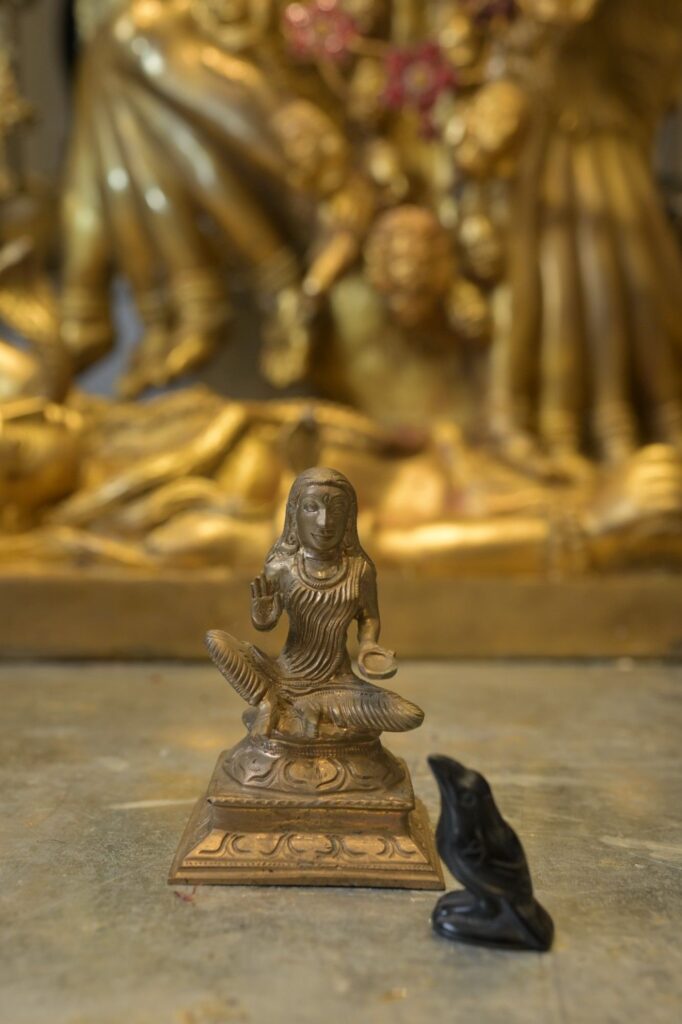
The Divine Nature of Maa Dhumavati
Maa Dhumavati is traditionally depicted as an elderly and austere form of the Divine Mother. Her appearance differs greatly from conventional representations of beauty and abundance.
Her form represents wisdom beyond worldly appearances and the realization that spiritual truth cannot always be found in comfort, attraction, or material achievement.
She is associated with solitude, detachment, silence, and the contemplative dimensions of existence. Yet this should not be understood simply as negativity. Rather, Dhumavati represents the profound wisdom that can emerge when the seeker learns to face impermanence without fear.
Why Is Maa Dhumavati Depicted as an Elderly Goddess?
Unlike many other forms of the Divine Mother, Maa Dhumavati is traditionally depicted as an elderly woman.This imagery carries deep symbolic meaning.
Youth, beauty, wealth, and worldly attraction are all temporary. By presenting the Goddess beyond conventional ideas of physical beauty, the tradition directs attention toward wisdom, experience, impermanence, and spiritual truth.Her form reminds devotees that the Divine cannot be limited to ideas of appearance or worldly attractiveness.
The elderly form therefore becomes a spiritual teaching: what is truly valuable is not always what appears beautiful on the surface.
Maa Dhumavati and the Wisdom of Impermanence
One of the central teachings associated with Dhumavati is the recognition of impermanence. Life continuously moves through cycles of beginning and ending, gain and loss, arrival and departure.
Dhumavati represents the wisdom of remaining conscious through these changes rather than allowing temporary circumstances to completely define one’s inner state. For the sincere devotee, contemplation of Maa Dhumavati can inspire:
- Greater inner stability
- Detachment from excessive attachment
- Patience during difficult periods
- Spiritual reflection
- Acceptance of change
- Greater awareness of life’s temporary nature
- Freedom from unnecessary fear
- A deeper search for spiritual truth
Worship of Maa Dhumavati
At Gupt Upasana – Mahakal Mahakali Mandir, worship of the Divine Mother is approached with reverence for traditional Shakta and Tantric principles. Devotional practices may include:
- Offering flowers to Maa Dhumavati
- Lighting a diya
- Offering traditional devotional items
- Reciting sacred prayers
- Meditation and contemplation
- Chanting appropriate mantras under proper guidance
- Maintaining discipline and purity of intention
Traditional Tantric practices associated with Dhumavati are generally approached within an appropriate guru-disciple lineage and should not be treated as casual or purely external rituals.
The essence of devotion remains faith, humility, spiritual discipline, contemplation, and surrender to the Divine Mother.
Maa Dhumavati and Spiritual Transformation
Dhumavati represents a form of transformation that begins when the seeker learns to accept reality as it is rather than constantly attempting to hold on to what is changing.
Her symbolism teaches that loss, uncertainty, solitude, and endings can sometimes become opportunities for deeper understanding. This does not mean seeking hardship. Instead, it means learning to meet unavoidable changes with awareness, patience, and spiritual strength.
Through this understanding, the seeker may gradually discover a greater sense of inner freedom.
A Reminder for Every Devotee
Maa Dhumavati teaches that not everything that disappears is a loss, and not everything that appears empty is without meaning. Her presence reminds us:
Accept what changes.
Release what no longer serves.
Remain steady through uncertainty.
Look beyond appearances.
Seek what is eternal.
Through this understanding, the seeker can gradually transform attachment into wisdom and uncertainty into deeper awareness.
Seek the Grace of Maa Dhumavati
May Maa Dhumavati bless sincere seekers with wisdom during uncertainty, patience during difficult circumstances, detachment from excessive attachment, and the courage to face life’s changes with inner stability.
May the Divine Mother guide every sincere seeker beyond temporary appearances toward greater spiritual awareness, understanding, and liberation.
|| धूं धूं धूमावत्यै स्वाहा ||
Visitors Guideline
- Entry into the inner Gupt Mandir is strictly prohibited for general visitors.
- Public darshan of Mahakal and Mahakali is available in the open section of the temple.
- Contact Gupt Upasana through mail for information concerning puja, sankalpa and devotional offerings.