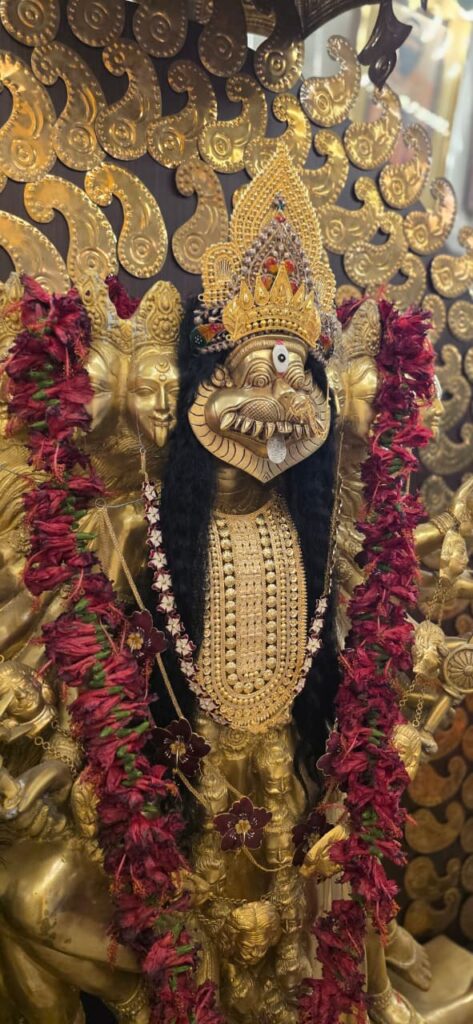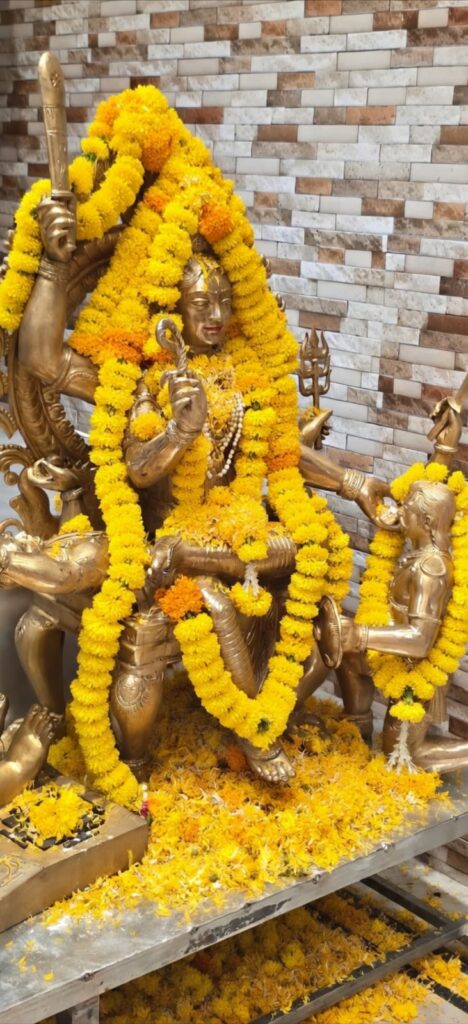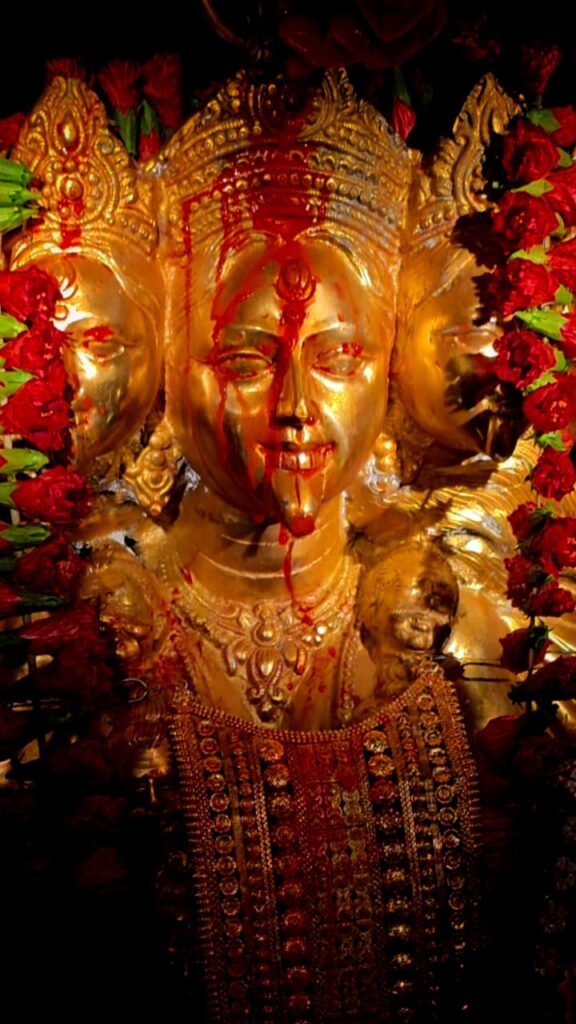
Why is Maa Pratyangira often worshipped alongside another Devi?
In several tantric traditions, Pratyangira is understood as an exceptionally fierce protective manifestation of Shakti, associated with the Atharvanic tradition and with the reversal or destruction of hostile forces. She is also identified differently across traditions—as Atharvana Bhadrakali, Narasimhi, or a Shakti associated with Sharabha. These identifications are not completely uniform across Hindu sampradayas.
The important tantric idea is not simply that “her energy is too much to handle.” Rather, the accompanying deity can provide a ritual and theological framework for that fierce Shakti.
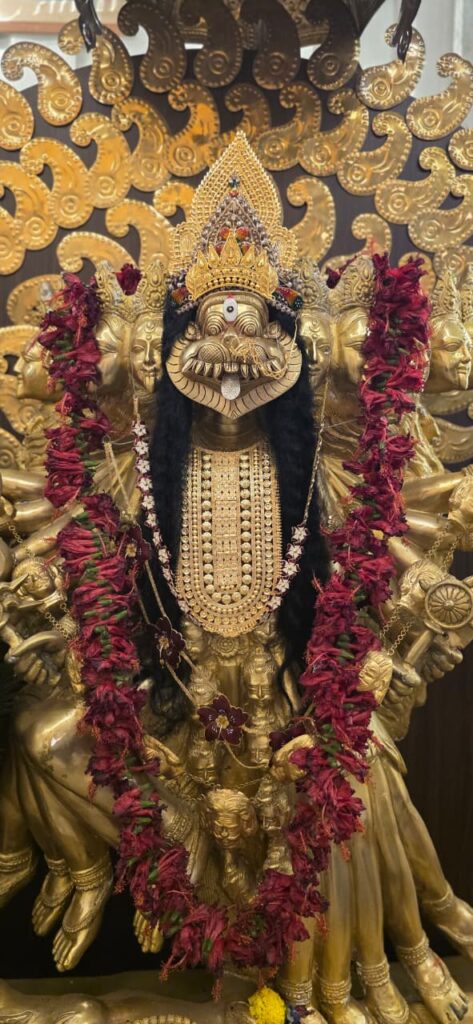
1. Ugra Shakti is approached through a complementary Shakti
In Shakta Tantra, fierce forms of Devi are often approached through another manifestation of the Divine Mother. A practitioner may therefore combine a fierce deity with a more saumya (peaceful), protective, or regulating form.
This can be understood symbolically as:
Ugra Shakti → containment → protection → integration
So traditions may associate Pratyangira with forms such as Kali, Bhadrakali, Durga or other Devi manifestations, depending on the sampradaya and paddhati.
It is better to describe this as shakti-samanvaya—the harmonisation of different aspects of Shakti—rather than claiming that scripture universally says Pratyangira must never be worshipped alone.
2. The “heat” experienced by a sādhaka
Tantric practitioners sometimes describe intense mantra-sādhana in terms of uṣṇa (heat), tejas (radiance), agni, spanda, or heightened inner intensity.
But there is no reliable scriptural basis for saying that every person necessarily experiences literal physical heat when worshipping Pratyangira.
The traditional language is more subtle. Fierce Devi-upāsana is associated with powerful transformation, destruction of obstacles and confrontation with fear, anger, negativity and hostile forces. Modern practitioners may interpret sensations such as heat, sweating, agitation or heightened bodily awareness through this tantric vocabulary. Contemporary practitioner discussions also commonly describe Pratyangira sādhana as producing an intense or “hot” experience, but these are experiential reports rather than proof of a supernatural physical phenomenon.
3. Her Atharvanic connection is particularly important
Pratyangira has a strong association in later Hindu tradition with Atharvana Bhadrakali and Atharvanic mantra traditions. Some traditional accounts connect her worship with rites involving the destruction or neutralisation of kṛtyā, hostile magical forces and other forms of harmful influence.
This explains why her worship acquired such a strong rakṣaṇa (protection), pratīkara (counteraction) and ugra character.
There is also an important scholarly caution here: identifying the goddess directly with a single Vedic deity called “Pratyangira” can oversimplify the history. The developed Pratyangira cult is a product of several layers of Atharvanic, Shaiva, Shakta and tantric traditions.
4. The Sharabha–Narasimha connection
One of the most important theological explanations for Pratyangira’s ferocity comes from traditions surrounding Sharabha and Narasimha.
In certain Shaiva traditions, Sharabha represents an extraordinary Rudra manifestation associated with pacifying or overcoming the terrifying manifestation of Narasimha. Pratyangira becomes associated with this theological complex in later tantric traditions. One traditional account specifically describes the later Hindu tantric stream as pairing Pratyangira with the Sharabha form of Shiva.
This produces a powerful symbolic triad:
Narasimha — extreme protective fury
Sharabha — supreme Rudra force / containment
Pratyangira — fierce feminine Shakti
The exact theology differs between Shaiva, Vaishnava and Shakta traditions, so these should not be presented as one universally accepted Hindu doctrine.
5. Why another Devi may be placed beside her
From a tantric perspective, the accompanying Devi can serve several functions:
- Ādhāra — providing a stable spiritual foundation.
- Saumyatā — balancing an intensely ugra manifestation with a gentler maternal aspect.
- Rakṣā — establishing a protective field around the sādhana.
- Śakti-samanvaya — integrating different expressions of the same Mahāśakti.
- Kramā — placing the fierce practice within an appropriate ritual sequence.
Thus, rather than saying:
“Pratyangira is too powerful, therefore she cannot be worshipped alone,”
a more traditionally defensible statement is:
“Because Pratyangira represents an exceptionally ugra and protective dimension of Shakti, many tantric paddhatis place her worship within a larger mandala of Devi, Bhairava or other protective deities. The accompanying deity provides ritual context, balance and protection for the sādhaka.”
And importantly, specific combinations depend upon the lineage, tantra, mantra and guru-paramparā; there is no single universal Pratyangira-puja arrangement.