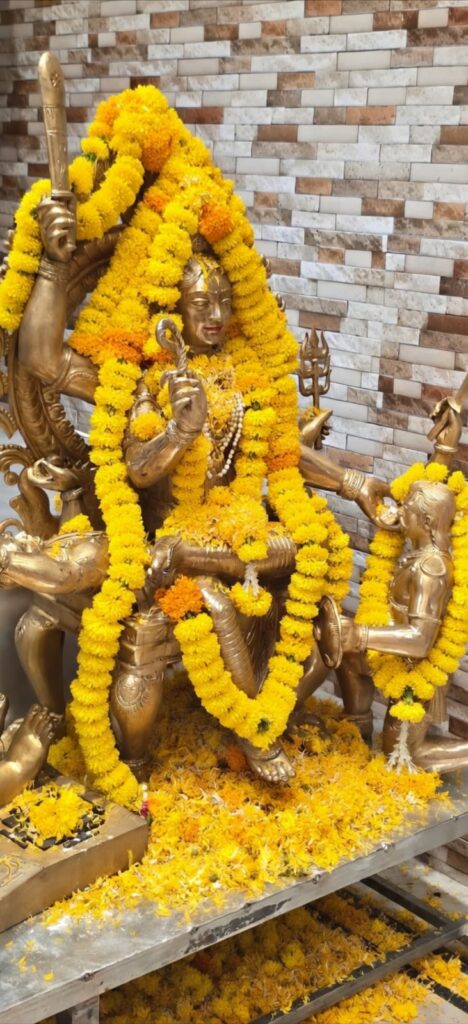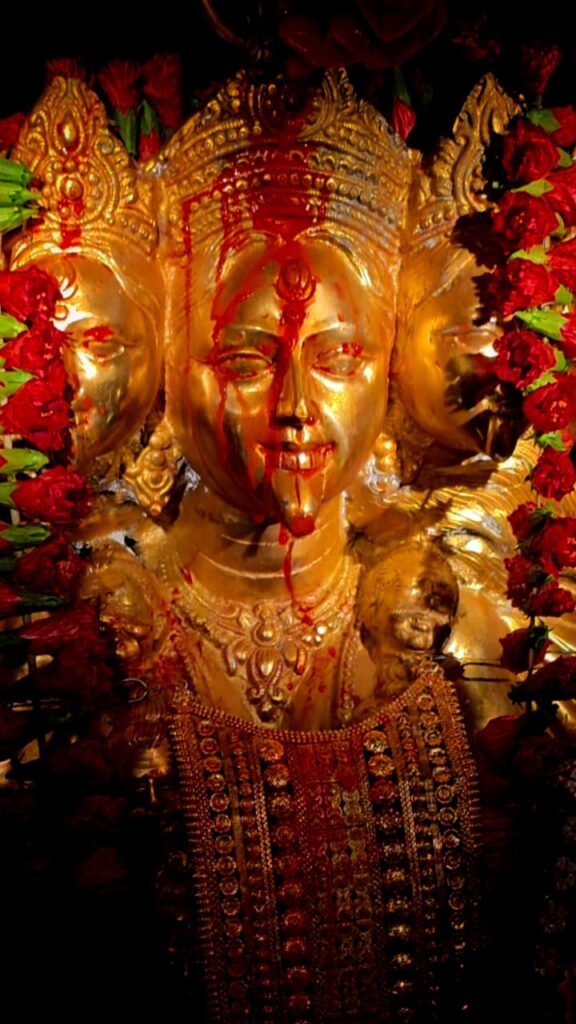
Kaushiki Amavasya and Tantric significance
Kaushiki Amavasya is the Bhadrapada Amavasya and has a particularly strong association with Maa Tara at Tarapith. Tarapith is historically one of Bengal’s major Shakta-Tantric centres, and Kaushiki Amavasya is one of its principal observances.
The popular Tarapith tradition associates this night with the manifestation of Tara and with the spiritual attainment of Sadhak Bamakhepa. Regional accounts describe the night as one when the boundary between the ordinary world and the spiritual/otherworldly realm becomes especially permeable. This is the source of the familiar expression that “Swarga and Naraka doors open” on Kaushiki Amavasya—not a claim that should be presented as a literal scientific event.
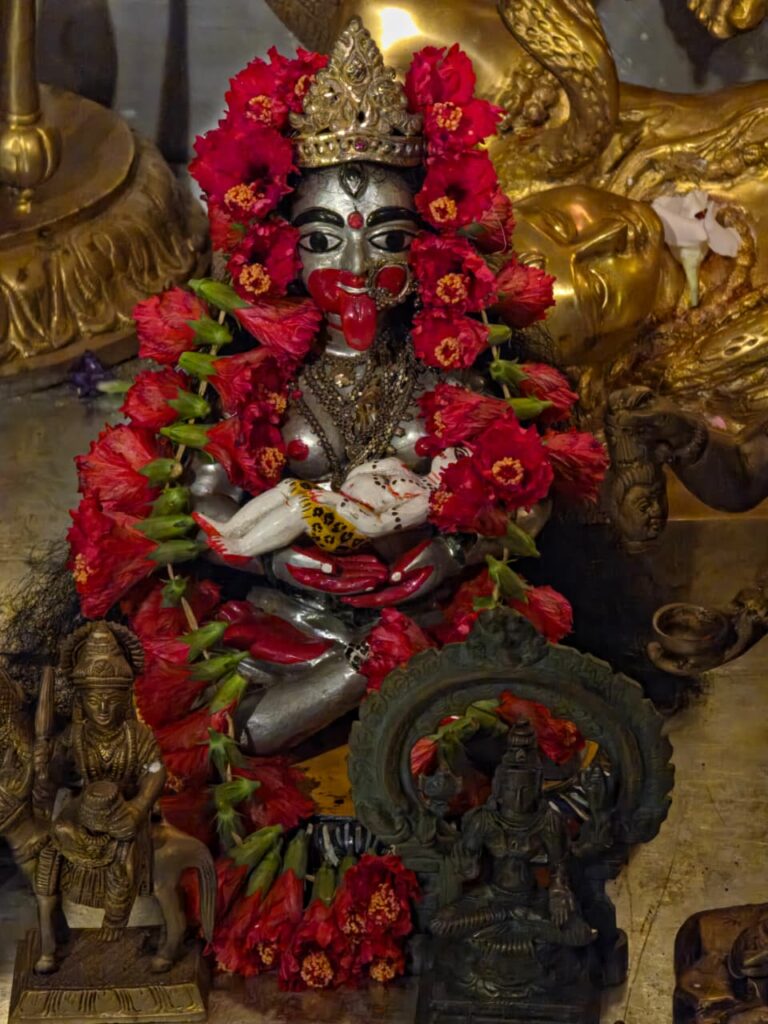
Why Tara, Kali and Bhairava?
From a Shakta-Tantric perspective, these deities can be understood through complementary functions:
- Maa Ugra Tara — fierce compassion, protection, liberation from fear and crossing difficult existential states.
- Maa Kali — Kāla-transcendence, destruction of limiting forces and transformation.
- Maa Baglamukhi — traditionally associated with stambhana, restraint and overcoming hostile or obstructive forces.
- Kaal Bhairava — the fierce form of Shiva associated with Kāla, protection, boundaries and the cremation-ground dimension of Shaiva Tantra.
The relationship between Devi and Bhairava is fundamental to many Tantric traditions: Devi is not worshipped in isolation but within a Devi–Bhairava theological framework.
Classical Tantric references
For a serious, text-based presentation, these are much stronger references than generic internet claims:
1. Bṛhannīla Tantra / Bṛhannīla Tantra tradition
This is particularly relevant to Tara. A Sanskrit edition preserved by the Central Sanskrit University archive contains chapters dealing with Tara, Ugra-Tara and associated mantras and sadhana.
Bṛhannīla Tantra — Sanskrit text archive
2. Sādhanamālā
An important Buddhist Tantric sādhana collection containing forms of Ugra Tara and related deity visualisations. The iconography of Ugra Tara standing upon a corpse in the cremation-ground setting is part of this wider Tantric tradition.
3. Devī Māhātmya / Mārkaṇḍeya Purāṇa
This is important for Kaushiki herself. The Devī emerges from the kośa or sheath of Pārvatī and subsequently destroys Śumbha and Niśumbha. Thus, the Kaushiki concept has a genuine Purāṇic foundation, although the specific association of Kaushiki Amavasya with Tarapith’s Tara worship belongs particularly to later regional Shakta tradition.
4. Kālikā Purāṇa
An important Shakta source for the wider theological and ritual environment surrounding fierce forms of Devi, Bhairava, sacred places and Shakta worship.
5. Tantrasāra of Kṛṣṇānanda Āgamavāgiśa
A major Bengali Kaula/Shakta compendium and an important reference for understanding the ritual framework of Kali and other Mahavidya-related worship.
6. Śāktapramoda
A later but valuable compendium of Shakta worship, containing ritual material concerning the Mahavidyas and other forms of Devi.
7. Tārātantra / Tara Tantric literature
The Tara Tantric corpus is particularly relevant when discussing Tara, Ekajaṭā, Ugra Tara and associated Bhairava forms. It should, however, be cited from a specific critical/Sanskrit edition rather than attributing every popular Tarapith practice to “the Tara Tantra.”
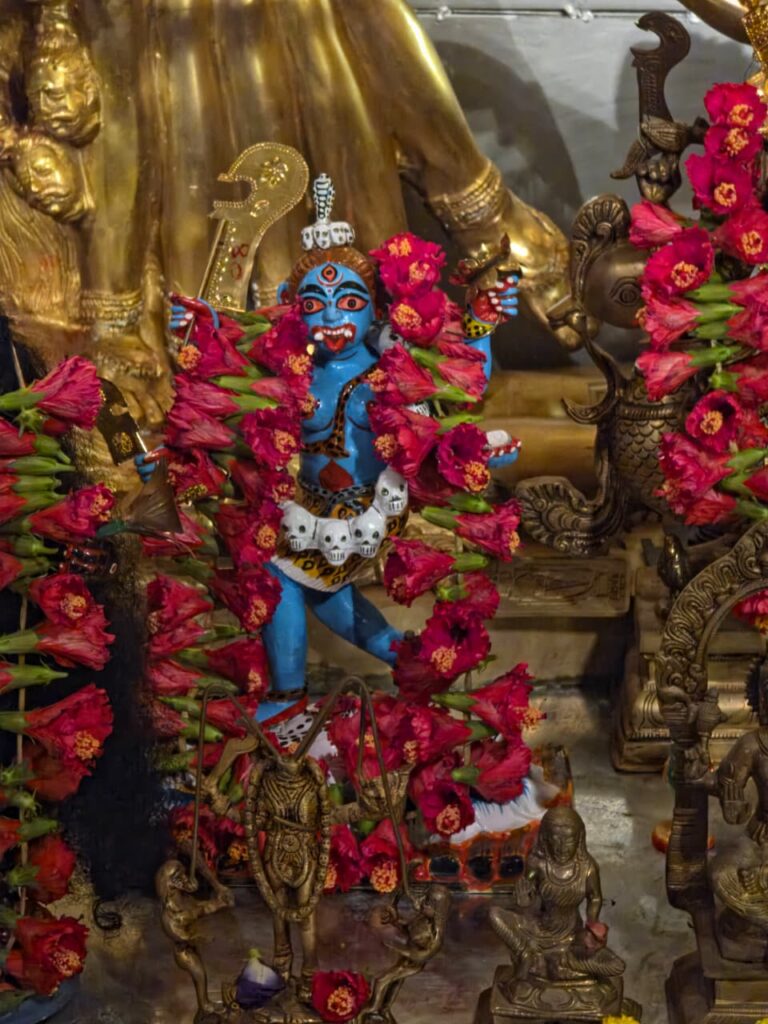
The “all problems of life” claim
For a temple or public-facing description, I would phrase this as spiritual protection and resolution of obstacles, rather than guaranteeing that a ritual will literally solve every problem.
Tantric worship traditionally seeks śānti, rakṣā, siddhi, removal of obstacles, overcoming fear and hostile influences, prosperity, spiritual advancement and ultimately liberation. The devotee’s saṅkalpa, faith, conduct and disciplined sādhana remain important.
A strong formulation would therefore be:
“Kaushiki Amavasya is regarded in the Shakta-Tantric tradition as one of the most powerful nights for Devi-upasana. At Tarapith, the night is especially associated with Maa Tara and the Mahashmashana. Devotees turn to Tara, Kali, Baglamukhi and Kaal Bhairava for protection, removal of obstacles, inner transformation, victory over fear and adversities, and fulfilment of righteous sankalpas.”
And for Gupt Upasana, you could present the theology as “Kaushiki Amavasya — the night of Tara, Kali and Bhairava, when the seeker turns inward and seeks Devi’s grace for protection, transformation and the removal of obstacles.”
One important distinction: Kaushiki Amavasya 2026 falls on September 10 at night, with the Amavasya tithi continuing into September 11 morning according to current Indian-calendar calculations.