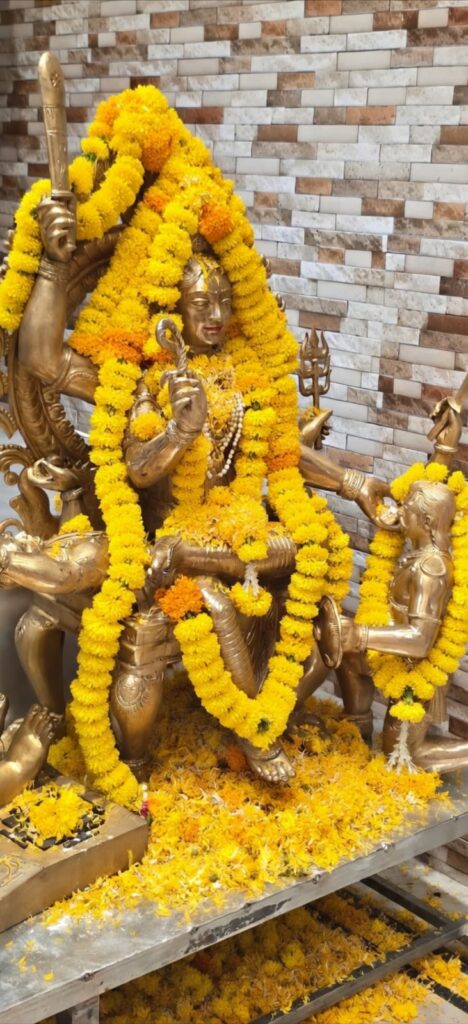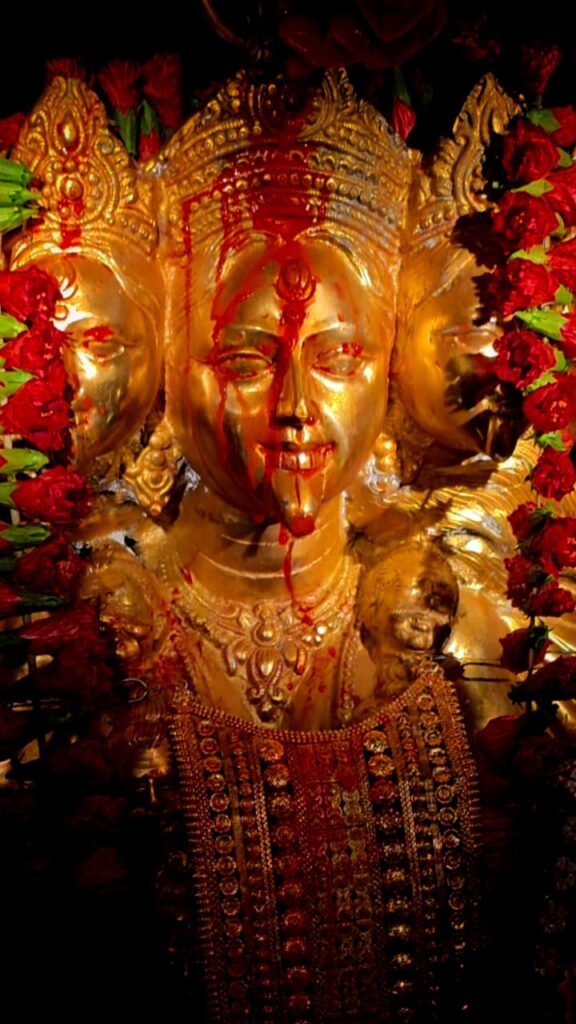
Why Is Worship of Deities in Their Child and Youthful Forms So Important? — The Tantric Meaning of Baal Kali, Tara, Shodashi, Batuka Bhairava, Ganesha, Kartikeya, Gopala and Hanuman
In Sanatana traditions of worship, a deity is never limited to a single form. The same Supreme Consciousness may manifest as Mahakala, Mahakali, Bhairava, the Divine Mother, and also in Baal — child — or Taruna — youthful — forms.
When we ordinarily think of a child form, we imagine innocence, tenderness and simplicity. In Tantric philosophy, however, the idea is much deeper.
The child form of a deity is not an incomplete, immature or weaker form of the divine. It represents a particular state of Shakti in which purity, potential, spontaneity and primordial creative power exist together.
This is why the Baal and youthful forms of deities occupy an important place in several Shakta, Shaiva, Sri Vidya and other spiritual traditions.
What Does “Baal” Mean in Tantra?
The ordinary meaning of Bala or Baal is a child or young person.
In Tantric symbolism, however, childhood does not merely refer to physical age.
It may represent:
Uncontaminated Shakti
The potential of new creation
Consciousness before the formation of ego
Spontaneous bliss
The freshly manifested yet infinitely potent state of divine energy
Therefore, when a deity appears in a child form, that form should never be considered weak or incomplete.
Just as an enormous tree exists in potential within a tiny seed, the Baal form contains within itself the infinite possibilities of divine Shakti.
One particularly important example appears in the Kularnava Tantra.
In the tenth Ullasa, within the context of Kumari worship, the text refers to the worship of a five-year-old Batuka and a nine-year-old Ganeshvara.
This is significant because it demonstrates that the Tantric tradition does not merely regard the divine child as an emotional or decorative representation. The child form itself can become a sacred manifestation worthy of worship.
The same broad Tantric principle is present in Kumari Puja: the worshipper is instructed not to see merely an ordinary child, but to cultivate Devata-Buddhi — the awareness that the Divine itself is present through that form.
This is one of the mysteries of Baal Tattva:
to perceive Para-Shakti beyond ordinary human ideas of age.
Baal Kali — The Pure Primordial Form of the Terrible Goddess
Mahakali is commonly associated with time, death, dissolution, destruction of ego and the terrifying manifestation of Supreme Shakti.
But Kali Tattva is not limited to terror.
Kali is Adi Shakti — primordial power itself.
When this power is contemplated in its earliest, completely unconditioned state, one encounters the principle of Baal Bhava — Shakti before it becomes restricted by social identity, fear, duality or worldly conditioning.
Different Guru Paramparas may interpret Baal Kali or Kumari Kali Bhava differently. There is no single universally identical “Baal Kali” ritual described across every Tantra. Therefore, its actual Sadhana must always be understood through the particular tradition and Guru Parampara concerned.
Philosophically, Baal Kali reminds the Sadhaka:
Shakti is never born and never dies. Only the form through which Shakti manifests changes.
Therefore, the terrifying mature manifestation of Mahakali and the innocent Baal manifestation of Kali are not opposites.
They are two experiences of the same Adya Shakti.
Tara — Motherhood, Protection and the Mystery of Primordial Shakti
Maa Tara is one of the principal Mahavidyas of the Shakta Tantric tradition.
She holds particularly important significance in the Shakta traditions of eastern India.
The name Tara is closely connected with the idea of Tarini — She Who Carries One Across.
Therefore, the youthful or childlike dimension of Tara may be understood as a manifestation of Shakti that combines primordial wisdom with intimate maternal protection.
Kali and Tara are closely associated in many Tantric traditions, yet their spiritual experiences are distinct.
Kali may destroy the limitation.
Tara carries the Sadhaka across it.
Kali confronts the darkness.
Tara becomes the power that guides consciousness through that darkness.
When Tara is approached through Baal Bhava, this immense cosmic power may be experienced through a more intimate, pure and direct relationship between devotee and deity.
Bala Tripurasundari — One of the Deepest Expressions of Child Divinity in Sri Vidya
One of the clearest and most sophisticated examples of Baal Tattva in Tantra is Bala Tripurasundari.
Sri Vidya is one of the great Shakta Tantric traditions centred upon Tripurasundari.
Within Sri Vidya traditions, Bala is not merely an artistic depiction of Tripurasundari as a young girl.
She possesses her own profound theological and initiatory significance.
This distinction is extremely important.
Bala is not simply a “smaller Tripurasundari.”
She is complete Divine Shakti in herself.
Her youthful manifestation symbolises a state in which:
Knowledge has not yet become burdened by intellectual pride.
Beauty has not yet become vanity.
Desire has not yet become attachment.
Power remains luminous and transparent.
Bala therefore represents the extraordinary meeting point of innocence, knowledge, beauty and Shakti.
Within Sri Vidya, the worship of Tripurasundari is deeply connected with mantra, chakra, meditation, inner worship and the transformation of consciousness.
Texts associated with the Sri Vidya tradition, including the Yogini Hridaya and related Tripura traditions, explore these extremely subtle dimensions of Shakti.
Shodashi — Why Is the Goddess Eternally Sixteen?
Another celebrated name of Tripurasundari is Shodashi.
The word Shodashi literally refers to one who is sixteen.
Within Tantra, however, sixteen should not be interpreted merely as the biological age of a girl.
It is symbolic.
It represents the moment when energy has reached complete flowering but has not entered decline.
Shodashi is therefore the symbolism of perfectly developed yet eternally youthful Shakti.
In this sense, Bala and Shodashi can be understood as two extraordinary dimensions of the same divine principle.
Bala represents the perfection of potential.
Shodashi represents the perfection of manifestation.
Tripurasundari and Shodashi are among the most sophisticated manifestations of the Divine Feminine within the Sri Vidya tradition.
She represents beauty, consciousness, desire, bliss and the harmony through which creation itself becomes possible.
Batuka Bhairava — Why Does the Terrible Bhairava Appear as a Child?
When people hear the name Bhairava, they often imagine the terrifying form of Shiva connected with cremation grounds, time, death, fearlessness and Rudra Shakti.
Yet Tantric tradition also speaks of Batuka Bhairava.
Batuka refers to a young boy.
This creates one of the most fascinating Tantric paradoxes.
The same Bhairava who stands beyond time and death can also manifest in the form of a child.
This teaches an important principle:
If we understand the Divine only through its terrifying manifestation, we are seeing only one side of Shakti.
The Kularnava Tantra’s reference to the worship of a five-year-old Batuka within a ritual context is particularly significant when considering this principle.
Batuka Bhairava therefore brings together two seemingly opposite realities:
The tremendous force of Bhairava.
And the spontaneity and purity of childhood.
Fearlessness and innocence can coexist within the same Supreme Consciousness.
Batuka is one of the profound manifestations of that mystery.
Baal Ganesha — The Power of Beginning Again
Another important child manifestation is Bala Ganapati or Baal Ganesha.
Among the traditional forms of Ganapati, Bala Ganapati represents the youthful dimension of the remover of obstacles.
Ganesha is traditionally worshipped at beginnings.
His Baal form therefore carries a particularly beautiful meaning:
every great achievement requires the capacity to begin again.
A child falls and gets up.
A child does not carry the psychological weight of every previous failure.
There is freshness in the child’s consciousness.
For a Sadhaka, this is an important spiritual lesson.
The ability to begin again without carrying excessive ego, pride, disappointment or fear is itself a form of divine intelligence.
The Kularnava Tantra’s reference to the worship of a young Ganeshvara further demonstrates that youthful manifestations of divine power have an acknowledged place within Tantric ritual consciousness.
Kartikeya or Kumara — The Eternal Youthful Power
One of the principal names of Kartikeya is itself Kumara — the Youth.
He is Deva-Senapati, commander of the divine forces, and represents courage, strength, knowledge, discipline and victory.
His particular significance lies in the fact that his symbolism is essentially connected with youthful Shakti.
Kartikeya therefore takes the principle of Baal Shakti into another phase.
The energy of a child is spontaneous.
The energy of youth becomes directional.
Kartikeya represents power that has acquired purpose, discipline and focus.
Seen together, Baal Ganesha and Kumara Kartikeya reveal a beautiful spiritual sequence:
Ganesha opens the path.
Kartikeya gives the courage and strength to advance upon it.
Baal Gopala — Loving God as One’s Own Child
The child form of Sri Krishna as Gopala is one of the most beloved manifestations in Indian devotional traditions.
Here, the relationship between the devotee and God changes dramatically.
The devotee does not merely fear God.
The devotee does not always approach God asking for something.
Instead, the devotee may love the Divine as one’s own child.
This is known as Vatsalya Bhava.
Its spiritual meaning is profound.
The One who sustains the entire universe becomes, within the heart of the devotee, a child whom the devotee can love, feed, dress and serve.
The enormous distance between human beings and the Absolute disappears.
The playfulness of Gopala — laughter, butter, mischief and innocence — brings devotion away from fear and towards intimacy.
Here, the foundation of worship becomes not fear but:
Love.
Baal Hanuman — Infinite Strength Without Ego
The childhood stories of Hanuman are among the most celebrated narratives of his divine personality.
In Baal Hanuman we encounter immense power together with fearlessness, curiosity, innocence and spontaneity.
For the spiritual practitioner, this is a powerful symbol.
The greater one’s power becomes, the greater the possibility of ego.
Hanuman demonstrates a different possibility:
true power can exist together with complete humility.
The mature Hanuman represents devotion, service, discipline and total surrender.
Baal Hanuman represents tremendous life-force, courage, fearlessness and limitless possibility.
Both belong to the same Hanuman Tattva.
From Baal to Taruna — The Complete Journey of Shakti
When these manifestations are contemplated together, an extraordinary progression of divine energy becomes visible.
Baal Kali — uncontaminated primordial Shakti.
Tara — the Mother who carries consciousness through darkness.
Bala Tripurasundari — pure knowledge, beauty and divine potential.
Shodashi — Shakti in complete youthful perfection.
Batuka Bhairava — terrible cosmic power expressed through an intimate youthful form.
Baal Ganesha — the power of new beginnings and removal of obstacles.
Kumara Kartikeya — courage, focus and disciplined youthful energy.
Baal Gopala — intimacy and Vatsalya Bhava between devotee and God.
Baal Hanuman — fearless life-force without ego.
Together they communicate a profound spiritual truth:
When Shakti is completely pure, She appears as Bala.
When Shakti reaches radiant manifestation, She appears as Taruna.
And when Shakti transcends childhood, youth, age, form and time altogether, She is recognised as the Supreme Divine.
Why Worship the Child and Youthful Forms of the Divine?
The worship of a Baal or youthful deity should not be reduced to the idea that such worship is only for childbirth, children or family welfare.
Different traditions may prescribe different purposes.
Spiritually, however, Baal and Taruna forms remind the Sadhaka of:
The ability to begin again
Freedom from unnecessary ego
Pure intention
Fearlessness
Joy
Creativity
Divine possibility
An intimate relationship with the deity
Before a Baal deity, the devotee is not always merely someone asking for blessings.
Sometimes the devotee serves the Divine with the affection of a parent.
At other times, the devotee becomes like a child before the Divine Mother or Divine Father.
When these two movements meet, worship becomes extraordinarily intimate.
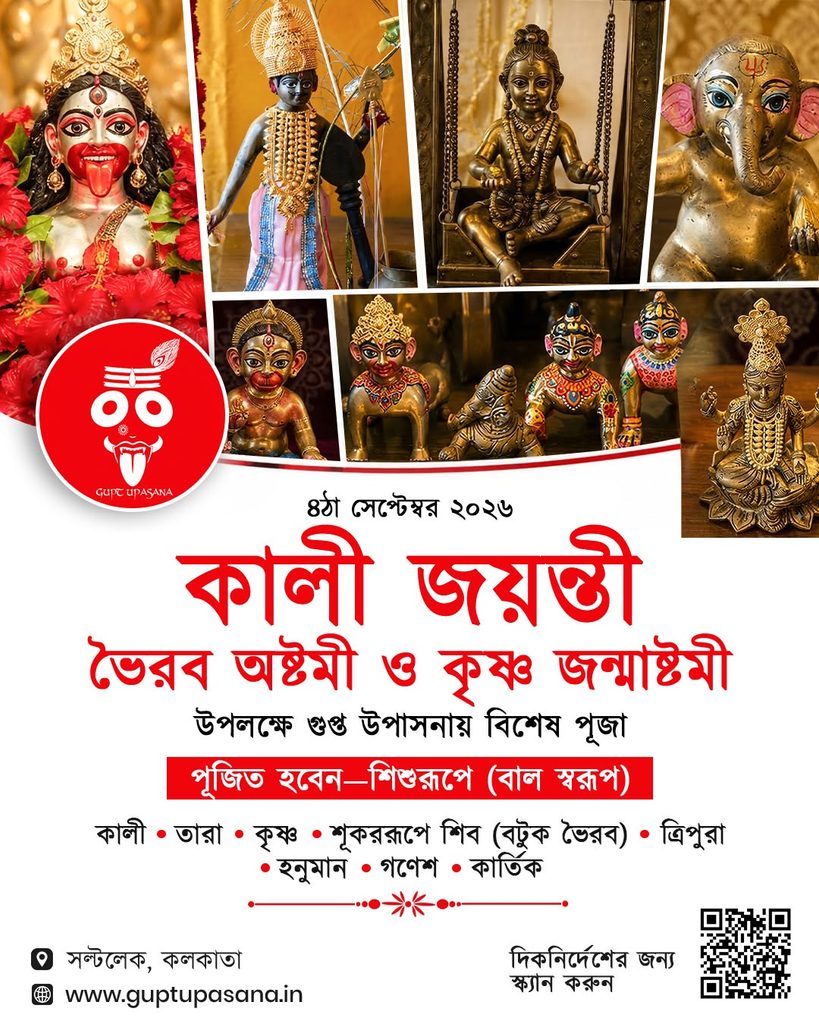
Baal and Taruna Devata Tattva at Gupt Upasana
Within the spiritual philosophy of Gupt Upasana, attention is not limited only to fierce, Ugra or fully mature manifestations of the Divine.
The Baal and Taruna dimensions of Devata Tattva are equally meaningful.
Through the contemplation and worship of Kali, Tara, Tripura-Shodashi, Batuka, Ganesha, Kartikeya, Gopala and Hanuman in their child or youthful dimensions, an important truth becomes visible:
The Divine is not limited by age. Child, youth, fierce, peaceful, mother and father are different manifestations of the same infinite Consciousness.
Tantra does not merely teach us to look at the deity outside ourselves.
Through every manifestation of the deity, Tantra asks us to recognise a corresponding state of consciousness within ourselves.
The innocence of the child exists within us.
The courage of youth exists within us.
The power of the Mother exists within us.
The protection of the Father exists within us.
The fearlessness of Bhairava, the wisdom of Ganesha, the Bhakti of Hanuman and the Ananda of Krishna are all different expressions of the same Supreme Shakti.
For this reason, the worship of Baal and Taruna forms should never be considered minor or secondary worship.
Within several Tantric and spiritual traditions, these manifestations represent some of the most subtle and profound ways of understanding Divine Shakti.
Tantric and Scriptural References
Kularnava Tantra — particularly relevant for its discussions surrounding Kumari worship, Batuka and Ganeshvara, and the principle of perceiving divinity through youthful manifestations.
Sri Vidya and Bala Tripurasundari traditions — Bala is recognised within Sri Vidya as an important manifestation of Tripura Shakti with distinct initiatory and contemplative significance.
Vamakeshvarimata and early Tripurasundari traditions — important sources for understanding the historical development of Tripurasundari-centred Shakta Tantra.
Yogini Hridaya — an important Sri Vidya text dealing with Sri Chakra, mantra, meditation, inner worship and the subtle philosophy of Shakti.
Tara-centred Shakta traditions — texts and traditions associated with Tara, including Tara Rahasya and later Tara-oriented traditions of eastern India, demonstrate the importance of Tara within Mahavidya and Tantric practice.
An Important Note on Tantric Practice
Understanding the philosophy of a Tantric deity and actually performing Tantric Sadhana are not the same thing.
Certain devotional prayers and forms of ordinary Puja may be practised according to one’s tradition, but specific Mantras, Nyasa, Yantra procedures, Mudras, Purashcharana, Homa and specialised Tantric Kriyas may require initiation and guidance from an authorised Guru and Parampara.
Tantra should therefore not be reduced to curiosity, experimentation or the casual repetition of secret practices found online.
Tantric philosophy may be studied openly. Authentic Tantric Sadhana, however, is traditionally a matter of Adhikara, discipline, Diksha and Guru Parampara.
Gupt Upasana
Mahakal • Mahakali • Mahavidya • Bhairava • A Sacred Space of Esoteric Tantric Upasana