
Maa Mahakali Upasana
Darshan of Maa Mahakali is Incomplete Without Mahakal: The Tantric Unity of Shiva and Shakti
“Without Mahakal, there is no Mahakali. Without Mahakali, Mahakal remains beyond manifestation.”
In the sacred traditions of Sanātana Dharma, especially within the Tantric schools of worship, মহাকাল and মহাকালী are not regarded as separate deities competing for devotion. They are understood as the inseparable union of Shiva (Pure Consciousness) and Shakti (Divine Energy). Their worship together symbolizes the harmony of stillness and action, eternity and time, transcendence and manifestation.
At Gupt Upasana – Mahakal Mahakali Mandir, this principle forms the foundation of daily worship. Devotees offer prayers to Mahakal and Maa Mahakali together, recognizing that Shiva and Shakti are revered in many traditions as an inseparable divine pair.
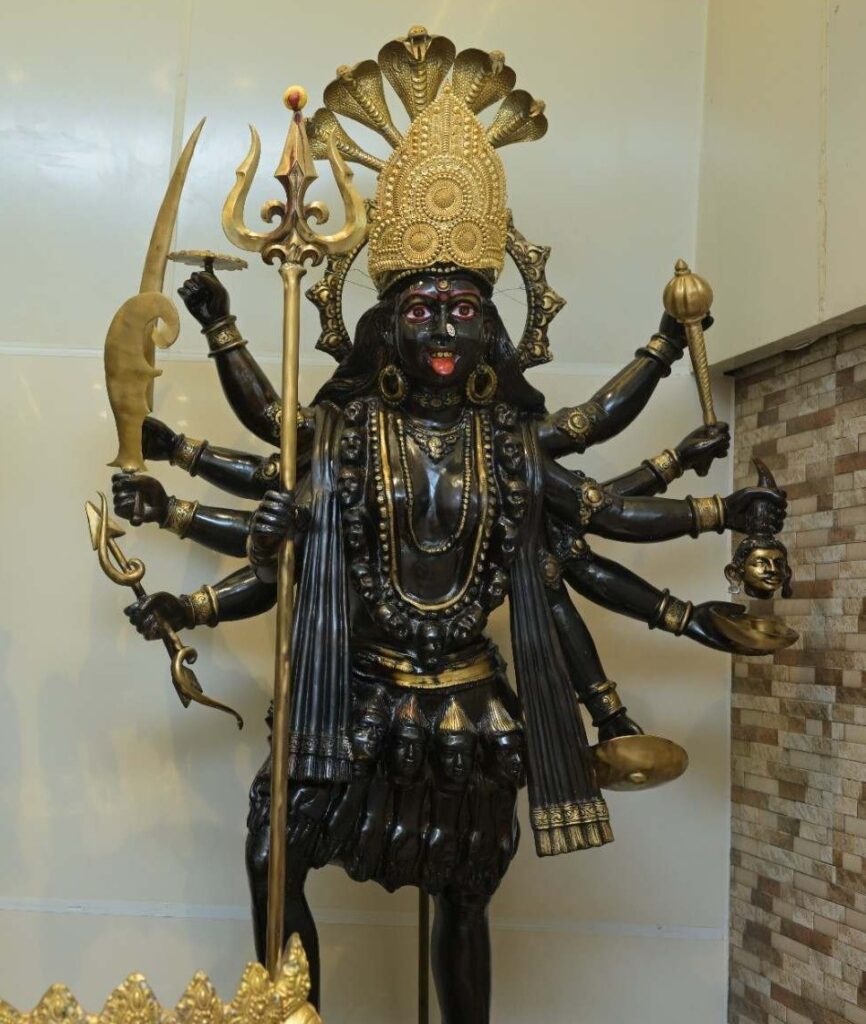
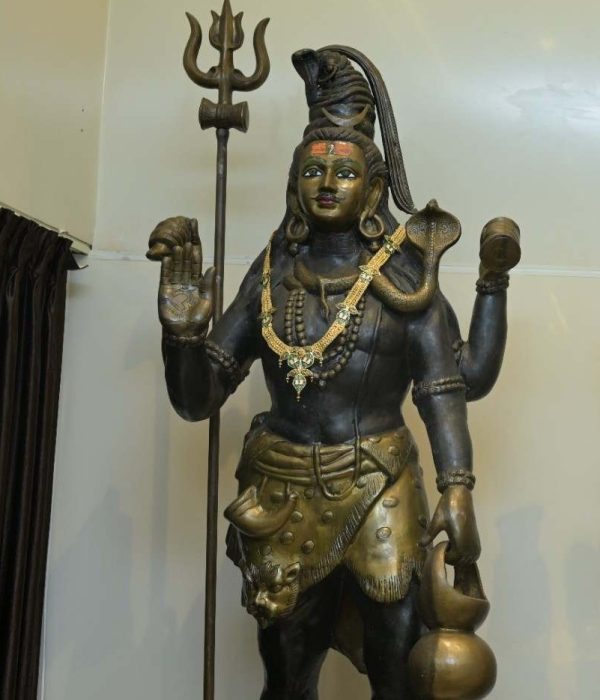
Mahakal – The Lord Beyond Time
The Sanskrit word Mahākāla literally means “The Great Time” or “The Lord of Time.” In Shaiva traditions, Mahakal represents the aspect of Shiva that transcends birth, death, creation, and dissolution. Time itself is considered subject to Mahakal.
The Yajurveda’s Śrī Rudram praises Rudra-Shiva as the all-pervading Lord present in every aspect of existence. Although the specific title “Mahakal” becomes prominent in later Shaiva literature, the Vedic hymns establish Shiva’s cosmic sovereignty and omnipresence.
The Shiva Purana describes Lord Shiva as the Supreme Reality from whom creation, preservation, and dissolution proceed. Shaiva theology frequently presents him as beyond time, while also being the source from which time unfolds.
Mahakali – The Power Who Moves Time
Maa Mahakali is the fierce and compassionate manifestation of the Divine Mother. She represents Kāla-Śakti—the power associated with time, transformation, protection, and the destruction of ignorance.
The Devi Mahatmya (within the Markandeya Purana) narrates the appearance of Kali during the battle against powerful demons, where she embodies the irresistible force that restores cosmic order (dharma).
The Devi Bhagavata Purana glorifies the Divine Mother as the supreme source of all energies, while Tantric traditions further contemplate Kali as the dynamic power through which the Absolute becomes manifest.
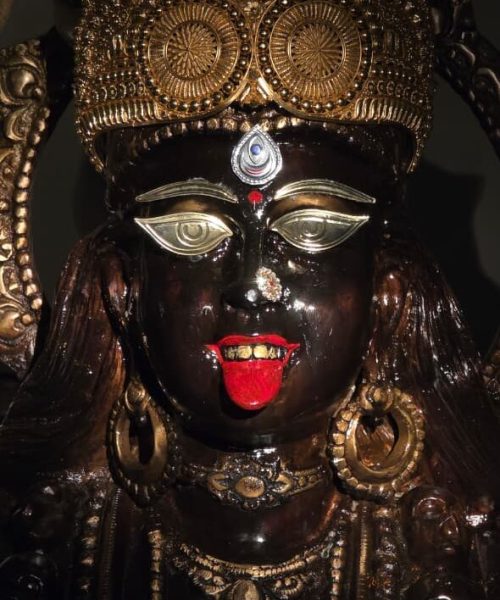
Tantra: Shiva and Shakti Are Inseparable
“Shiva becomes capable of creation only when united with Shakti; otherwise, He is not even able to stir.”
One of the central teachings of the Tantric tradition is that Shiva without Shakti is inactive, and Shakti expresses herself through Shiva.
A celebrated verse found in the Saundarya Lahari, traditionally attributed to Adi Shankaracharya, expresses this idea:
“Shiva becomes capable of creation only when united with Shakti; otherwise, He is not even able to stir.”
This verse is widely quoted in both Shakta and Shaiva traditions to explain the metaphysical unity of consciousness (Shiva) and energy (Shakti).
The Kularnava Tantra, one of the principal scriptures of Kaula Tantra, repeatedly teaches that realization of the highest truth requires understanding the unity of Shiva and Shakti rather than treating them as independent realities.
Similarly, the Mahanirvana Tantra emphasizes the worship of the Divine through the union of Shiva and Shakti, presenting them as complementary aspects of the same Supreme Reality.
Why Kali is Often Depicted Standing on Shiva
One of the most profound images in Hindu iconography is Maa Kali standing upon the reclining body of Shiva.
This image is not meant to portray superiority or conflict. Traditional interpretations explain that:
- Shiva symbolizes pure, motionless consciousness.
- Kali symbolizes the dynamic power of creation and transformation.
- Consciousness without energy remains unmanifest.
- Energy without consciousness lacks direction.
Together they represent the complete nature of the Divine.
The Spiritual Significance of Worshipping Mahakal and Mahakali Together
Many Shaiva and Shakta lineages regard the combined worship of Shiva and Shakti as spiritually significant because it symbolizes:
- The balance of consciousness and energy.
- The transcendence of fear through devotion.
- The contemplation of creation, preservation, and dissolution as aspects of one reality.
- The pursuit of liberation (moksha) while remaining engaged in righteous living.
Different Tantric traditions prescribe different forms of worship, mantra, and meditation. Such practices are traditionally learned under the guidance of a qualified guru and should not be undertaken solely from written descriptions.
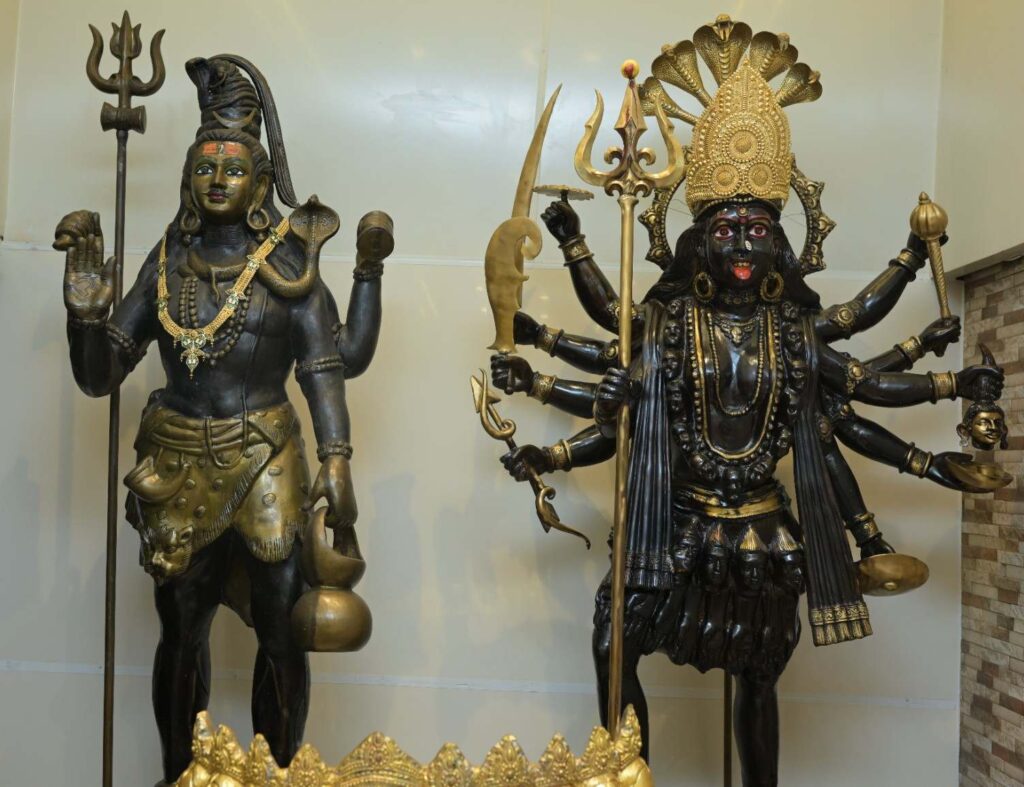
Worship at Gupt Upasana – Mahakal Mahakali Mandir
At Gupt Upasana – Mahakal Mahakali Mandir, devotion is offered to Mahakal and Maa Mahakali together, honoring the timeless Tantric understanding of the unity of Shiva and Shakti.
Temple worship includes traditional offerings such as:
- Bilva leaves offered to Mahakal.
- Flowers and lamps offered to Maa Mahakali.
- Rudrabhishek for Lord Mahakal.
- Collective prayers for peace, courage, spiritual welfare, and the removal of obstacles.
- Special worship conducted on auspicious occasions in accordance with temple tradition.
Devotees visit the temple to seek divine blessings, cultivate inner discipline, and deepen their spiritual connection through reverence, prayer, and service.
Scriptural References
- Śrī Rudram (Namakam & Chamakam) – Krishna Yajurveda (Taittiriya Samhita).
- Shiva Purana – Various sections describing Shiva as the Supreme Reality.
- Devi Mahatmya – Markandeya Purana, Chapters 7–10 (appearance and exploits of Kali).
- Devi Bhagavata Purana – On the supremacy of the Divine Mother.
- Kularnava Tantra – Teachings on the unity of Shiva and Shakti.
- Mahanirvana Tantra – Philosophical and ritual exposition of Shiva-Shakti worship.
- Saundarya Lahari, Verse 1 – On the inseparability of Shiva and Shakti.
|| ॐ क्रीं कालिकायै नमः ||
Visitors Guideline
- Entry into the inner Gupt Mandir is strictly prohibited for general visitors.
- Public darshan of Mahakal and Mahakali is available in the open section of the temple.
- Contact Gupt Upasana through mail for information concerning puja, sankalpa and devotional offerings.