
Dashamukhi Hanuman Upasana
The Ten-Faced Form of Lord Hanuman
Dashamukhi Hanuman, meaning the Ten-Faced Hanuman, represents an extraordinary manifestation of Lord Hanuman associated with immense strength, protection, courage, devotion, and spiritual power.
The ten faces symbolize the vastness of divine consciousness and the ability to overcome obstacles from every direction. This powerful form reminds devotees that true strength arises not only from physical power, but also from devotion, wisdom, discipline, and unwavering faith.
“Where devotion becomes strength, fear finds no place.”
Rather than viewing the ten faces merely as a physical form, devotees may contemplate them as a reminder that divine power manifests through many qualities — courage, wisdom, devotion, discipline, protection, patience, determination, and righteous action.
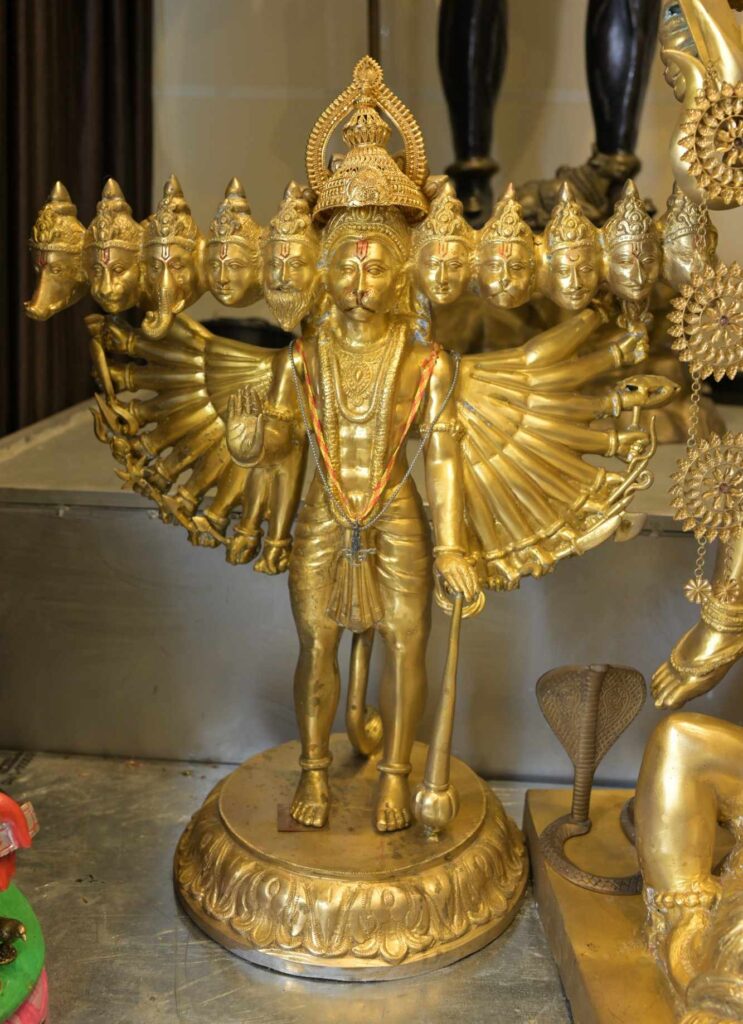
Ten Faces — Ten Divine Qualities
The ten-faced form may be contemplated through ten principal qualities associated with Hanuman:
1. Bhakti – Devotion
Hanuman’s greatest strength is his unwavering devotion to Lord Rama. His complete surrender teaches devotees the power of faith and selfless dedication.
2. Shakti – Divine Strength
Hanuman represents extraordinary physical and spiritual strength. His power is traditionally understood as being directed toward the protection of righteousness.
3. Buddhi – Wisdom
Hanuman is celebrated not only for strength but also for intelligence, discernment, and the ability to act wisely in difficult circumstances.
4. Sahasa – Courage
The life of Hanuman reflects fearless action. He teaches devotees to face challenges with determination rather than allowing fear to control their actions.
5. Raksha – Protection
Dashamukhi Hanuman is revered as a powerful protective presence. Devotees turn to him for courage, inner strength, and protection from obstacles.
6. Seva – Selfless Service
Hanuman’s service to Lord Rama represents humility without weakness and devotion expressed through righteous action.
7. Sankalp – Determination
Once Hanuman accepts a righteous purpose, he remains unwavering. His example teaches the importance of discipline and perseverance.
8. Vinaya – Humility
Despite possessing immense powers, Hanuman remains humble. His humility demonstrates that true greatness does not require pride.
9. Dharma — Righteousness
Hanuman’s actions are closely connected with the protection of dharma. His devotion is expressed through action guided by righteousness.
10. Jnana — Spiritual Wisdom
The form of Hanuman also reminds devotees that physical strength reaches its highest purpose when guided by knowledge and spiritual understanding.
Why Is Hanuman Shown With Ten Faces?
The ten-faced depiction emphasizes the many-sided nature of divine protection and consciousness.
Each face can be contemplated as a different expression of strength and awareness. Together, they create an image of a deity who is spiritually alert in every direction and prepared to confront forces that obstruct the path of dharma.
For devotees, Dashamukhi Hanuman therefore becomes a symbol of fearlessness, vigilance, devotion, and complete spiritual strength.
Different traditions may interpret the individual faces and their symbolism differently; the deeper meaning remains centered on divine protection and the many dimensions of Hanuman’s power.
Worship of Dashamukhi Hanuman
At Gupt Upasana – Mahakal Mahakali Mandir, devotion to Hanuman is approached with reverence for his role as the devoted servant of Lord Rama and as a powerful symbol of protection and courage.
Traditional devotional practices may include:
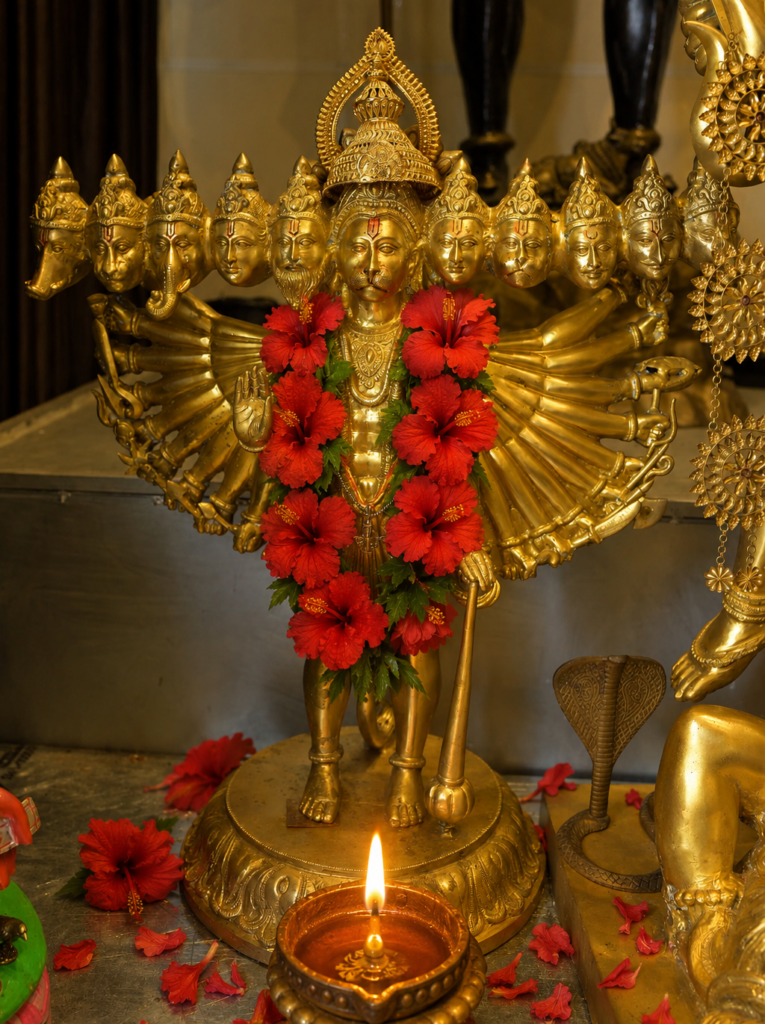
- Offering flowers and sindoor
- Lighting a diya
- Reciting the Hanuman Chalisa
- Chanting the name of Lord Rama and Hanuman
- Offering prayers with sincerity and devotion
- Practicing self-discipline and righteous conduct
The essence of worship is not the external offering alone, but the faith, humility, and devotion with which it is offered.
Hanuman Chalisa — A Path of Devotion
The Hanuman Chalisa is one of the most widely recited devotional works dedicated to Lord Hanuman. Devotees traditionally recite it as an expression of faith, remembrance, and devotion.
Rather than approaching Hanuman only as a source of worldly strength, the Chalisa encourages devotees to remember his virtues — his devotion to Rama, humility, courage, wisdom, and service.
A Reminder for Every Devotee
The greatest lesson of Hanuman is not simply that he possessed extraordinary strength.
It is that he knew where that strength belonged.
His power belonged to devotion.
His courage belonged to dharma.
His wisdom belonged to service.
His heart belonged to Lord Rama.
Dashamukhi Hanuman therefore stands as a reminder to use our own abilities with purpose, humility, courage, and faith.
Seek the Blessings of Dashamukhi Hanuman
May the divine presence of Dashamukhi Hanuman inspire courage in times of difficulty, wisdom in times of uncertainty, strength in times of weakness, and devotion in every step of life.
May his protective presence guide devotees toward fearlessness, discipline, righteous action, and spiritual awareness.
|| ॐ श्री हनुमते नमः ||
Visitors Guideline
- Entry into the inner Gupt Mandir is strictly prohibited for general visitors.
- Public darshan of Mahakal and Mahakali is available in the open section of the temple.
- Contact Gupt Upasana through mail for information concerning puja, sankalpa and devotional offerings.