
Maa Chhinnamasta Upasana
Maa Chhinnamasta – The Fearless Divine Mother
Maa Chhinnamasta is one of the Dashamahavidyas, the ten great manifestations of the Divine Mother in the Shakta tradition. She represents one of the most profound and symbolically powerful expressions of Shakti, associated with self-sacrifice, transformation, spiritual awakening, fearlessness, and the transcendence of the ego.
Her name comes from the Sanskrit words Chhinna, meaning severed or cut, and Masta, meaning head. The imagery associated with her is deeply symbolic and should not be understood merely at a literal level. It represents the cutting away of ego, attachment, ignorance, and limited self-identification.
At Gupt Upasana – Mahakal Mahakali Mandir, Maa Chhinnamasta represents the intense transformative dimension of the Divine Mother — the force that reminds the seeker that spiritual awakening requires courage, surrender, and the willingness to move beyond the limitations of the ego.
“When the ego is surrendered, the deeper power of consciousness begins to reveal itself.”
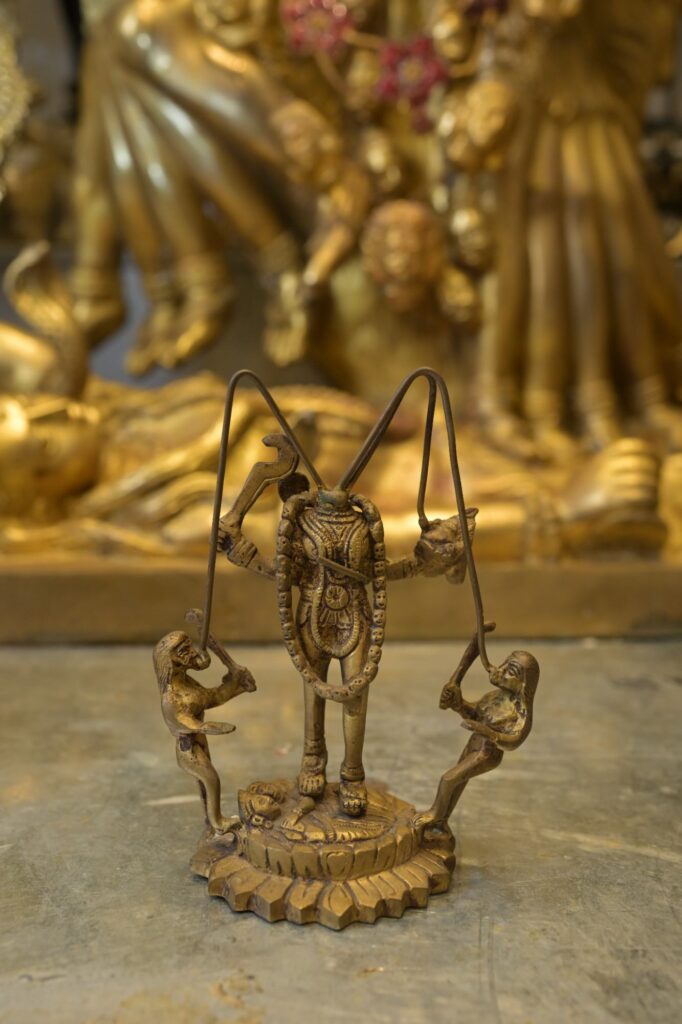
The Divine Nature of Maa Chhinnamasta
Maa Chhinnamasta is among the most mysterious and visually striking forms of the Divine Mother.Her iconography expresses a powerful paradox: creation and dissolution, life and transformation, nourishment and sacrifice exist together within the same divine reality.
She represents the ability of Shakti to transcend ordinary opposites.Her fierce appearance is not intended merely to create fear. Rather, it communicates an uncompromising spiritual truth: the path toward higher awareness may require the surrender of ego, attachment, and fear.
Thus, Maa Chhinnamasta is both fierce and compassionate — fierce toward ignorance and ego, yet compassionate toward the sincere seeker who approaches her with humility.
Why Is Maa Chhinnamasta Depicted in Such a Fierce Form?
The unusual form of Maa Chhinnamasta is deeply symbolic.Her iconography communicates truths that are difficult to express through conventional imagery. The severed head represents the surrender of ego, while the flowing life force represents the continuity and abundance of Shakti.
Rather than understanding the imagery literally, devotees may contemplate it as a representation of the relationship between sacrifice, life energy, consciousness, and spiritual transformation.
The Goddess therefore reminds the seeker that profound transformation sometimes requires moving beyond familiar ideas of identity and control.
Maa Chhinnamasta and the Transcendence of Ego
One of the central teachings associated with Chhinnamasta is the transformation of Ahamkara, or ego-consciousness.
The ego is not simply confidence or individuality. In spiritual philosophy, excessive identification with “I” and “mine” can become a source of attachment and suffering.Maa Chhinnamasta symbolizes the moment when this limited identification is surrendered.
For the sincere devotee, contemplation of her form can inspire:
- Greater self-awareness
- Freedom from excessive ego
- Courage during personal transformation
- Detachment from unnecessary attachment
- Spiritual discipline
- Greater awareness of life’s interconnectedness
- Surrender to the Divine
- A deeper search for spiritual truth
The Three Streams of Divine Energy
The traditional iconography of Maa Chhinnamasta includes three streams associated with her form. These are commonly understood within Tantric symbolism in relation to pranic energy and the subtle channels of consciousness.
The imagery points toward the interconnected nature of individual consciousness, life force, and divine Shakti. It reminds the seeker that spiritual transformation is not simply an intellectual process. It involves the whole being — body, mind, breath, awareness, and consciousness.
Interpretations of these symbols vary across different Tantric traditions, and their deeper meanings are traditionally explored under appropriate spiritual guidance.
Maa Chhinnamasta and Spiritual Transformation
The path represented by Chhinnamasta is one of profound inner transformation. She reminds the seeker that spiritual growth often requires letting go of old patterns of identification, attachment, fear, and excessive self-interest.
This does not mean rejecting life. Instead, it means learning to participate in life without becoming completely bound by temporary identities and circumstances.
The Goddess therefore represents a state in which strength and surrender, individuality and universality, life and transformation are understood as interconnected.
Worship of Maa Chhinnamasta
At Gupt Upasana – Mahakal Mahakali Mandir, worship of the Divine Mother is approached with reverence for traditional Shakta and Tantric principles.
Devotional practices may include:
- Offering flowers to Maa Chhinnamasta
- Lighting a diya
- Offering traditional devotional items
- Reciting sacred prayers
- Meditation and contemplation
- Chanting appropriate mantras under proper guidance
- Maintaining spiritual discipline and purity of intention
Specific Tantric rituals and mantras associated with Maa Chhinnamasta traditionally belong to established guru-disciple lineages and should be approached under appropriate guidance. The essence of devotion remains faith, humility, discipline, surrender, and sincere remembrance of the Divine Mother.
A Reminder for Every Devotee
Maa Chhinnamasta teaches that true strength is not always found in holding on. Sometimes strength is found in knowing what must be surrendered. Her form reminds us:
Release excessive ego.
Face transformation with courage.
Remain aware of the Divine within.
Let devotion guide strength.
Allow surrender to become freedom.
Through this understanding, the seeker may gradually move from limited self-identification toward a deeper awareness of Shakti and consciousness.
Seek the Grace of Maa Chhinnamasta
May Maa Chhinnamasta bless sincere seekers with fearlessness during transformation, wisdom beyond ego, strength through surrender, and clarity upon the spiritual path.
May the Divine Mother guide every sincere devotee toward greater self-awareness, detachment, spiritual courage, and liberation from the limitations of the ego.
|| श्रीं ह्रीं क्लीं ऐं वज्र वैरोचनियै हूँ हूँ फट् स्वाहा ||
Visitors Guideline
- Entry into the inner Gupt Mandir is strictly prohibited for general visitors.
- Public darshan of Mahakal and Mahakali is available in the open section of the temple.
- Contact Gupt Upasana through mail for information concerning puja, sankalpa and devotional offerings.