
Ashta Bhairavas Upasana
Ashta Bhairavas – The Eight Divine Forms of Lord Bhairava
Ashta Bhairavas, meaning the Eight Bhairavas, represent eight powerful manifestations of Lord Bhairava, the fierce and protective aspect of Lord Shiva. Within Shaiva and Shakta traditions, Bhairava is revered as a guardian of sacred spaces, a remover of obstacles, and a powerful force associated with protection, transformation, discipline, and spiritual awareness.
“Where Bhairava protects, fear loses its power and the path toward truth becomes clearer.”
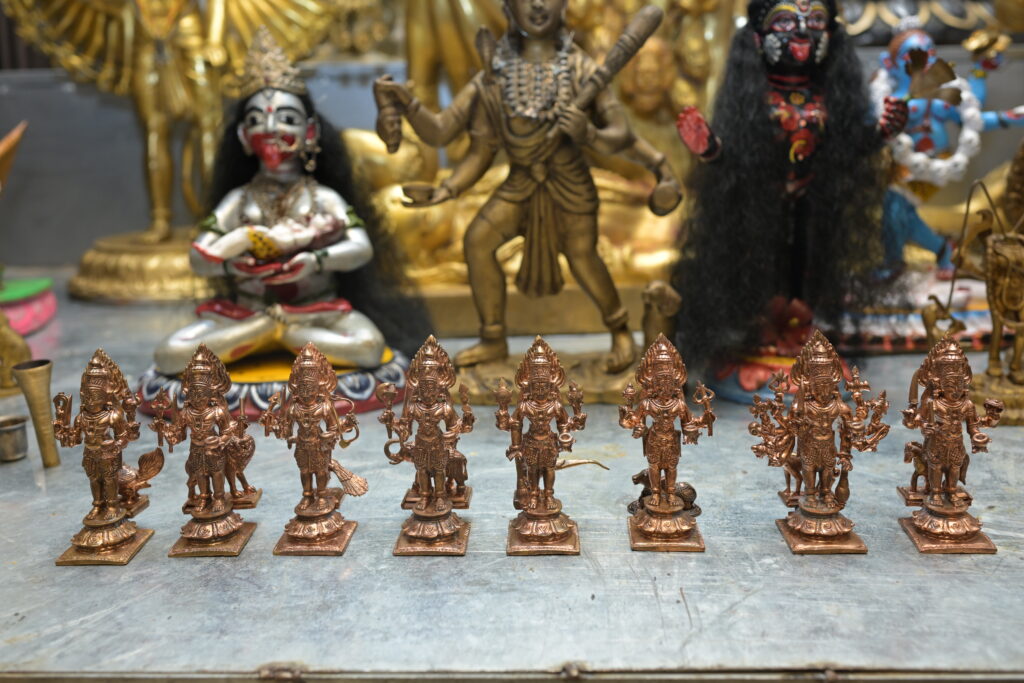
The Eight Forms of Bhairava
The Ashta Bhairavas are traditionally identified as:
1. Asitanga Bhairava — The Form of Sacred Discipline
Asitanga Bhairava represents a contemplative and disciplined dimension of Bhairava. His symbolism is associated with spiritual awareness, discipline, and the ability to remain steady upon the path of devotion. For the seeker, Asitanga Bhairava can be contemplated as a reminder that spiritual strength begins with self-control, discipline, and focused awareness.
2. Ruru Bhairava — The Guide of Wisdom
Ruru Bhairava represents the wisdom-giving and guiding dimension of Bhairava. His form is associated with knowledge, discernment, and the ability to recognize the right path amid uncertainty. Ruru Bhairava reminds devotees that strength without wisdom can become directionless, while knowledge guided by discipline can become a powerful instrument for spiritual growth.
3. Chanda Bhairava — The Fierce Protector
Chanda Bhairava represents the intense and courageous aspect of Bhairava. His fierce nature symbolizes the determination required to confront obstacles, negativity, and forces that obstruct the path of dharma. For devotees, Chanda Bhairava becomes a reminder to develop courage, determination, and fearlessness when facing difficult circumstances.
4. Krodha Bhairava — The Power of Divine Force
Krodha Bhairava represents the intense transformative force of Bhairava. The word Krodha is associated with anger or fierce energy. In a spiritual context, this symbolism can be contemplated as the transformation of uncontrolled emotional force into disciplined strength directed toward righteous action. Krodha Bhairava reminds the seeker that powerful energy must be governed by awareness and dharma.
5. Unmatta Bhairava — Beyond Conventional Limitations
Unmatta Bhairava represents a form of Bhairava whose symbolism challenges ordinary ideas of social and mental convention. The term Unmatta is associated with an extraordinary or unconventional state. In spiritual contemplation, this can represent a consciousness that has moved beyond ordinary limitations and attachments. His form reminds the seeker that spiritual reality cannot always be understood through conventional appearances and that deeper awareness requires moving beyond superficial judgment.
6. Kapala Bhairava — The Wisdom of Impermanence
Kapala Bhairava is associated with the symbolism of the kapala, or skull. The skull serves as a powerful reminder of the impermanent nature of the physical world. Kapala Bhairava therefore encourages the devotee to contemplate impermanence, detachment, and the temporary nature of worldly identity.
His presence reminds us that material forms change, while the deeper spiritual journey moves beyond temporary appearances.
7. Bhishana Bhairava — The Terrible Protector
Bhishana Bhairava represents the formidable and awe-inspiring dimension of divine protection. The word Bhishana conveys a sense of fearsome or terrifying power. His fierce symbolism represents the ability of divine consciousness to confront that which threatens dharma and spiritual balance. For the devotee, Bhishana Bhairava becomes a symbol of fearlessness, protection, and inner strength.
8. Samhara Bhairava — The Power of Dissolution
Samhara Bhairava represents the transformative power of dissolution. The word Samhara is associated with dissolution, destruction, or withdrawal. In Shaiva philosophy, dissolution is not simply an ending; it is part of the larger cosmic cycle of creation, preservation, transformation, and renewal.
Samhara Bhairava reminds the seeker that certain things must come to an end so that transformation and renewal can take place.
The Spiritual Significance of the Ashta Bhairavas
The eight forms together represent a vast spectrum of divine qualities.
They can be contemplated through:
Discipline.
Wisdom.
Courage.
Transformative strength.
Freedom from limitation.
Detachment.
Protection.
Dissolution and renewal.
Together, these qualities remind devotees that spiritual growth requires more than devotion alone. It also requires awareness, courage, discipline, discernment, and the ability to transform.
The Eightfold Protection of Bhairava
The Ashta Bhairavas are traditionally associated with the protection of the eight directions. This eightfold symbolism represents the idea of complete spiritual guardianship.
The devotee may contemplate the eight forms as a sacred circle of protection surrounding the spiritual journey — reminding the seeker that divine consciousness is not limited to a single direction or dimension.
The deeper meaning is not simply physical protection, but the cultivation of an inner state in which fear, confusion, and spiritual distraction no longer dominate the mind.
Bhairava and the Relationship Between Shiva and Shakti
Bhairava occupies an important place within both Shaiva and Shakta traditions. The fierce protective energy of Bhairava is often understood in relationship with Shakti, the dynamic power of the Divine Mother.
Shiva represents consciousness, while Shakti represents its dynamic expression. Bhairava embodies a powerful meeting of these principles — stillness and force, consciousness and action, protection and transformation.
At Gupt Upasana, the presence of Bhairava alongside the forms of the Divine Mother reflects this deeper relationship between Shiva and Shakti.
Bhairava and the Inner Obstacles
The greatest obstacles on the spiritual path are not always external. Fear, pride, confusion, attachment, uncontrolled emotions, and lack of discipline can become powerful barriers to inner growth.
The Ashta Bhairavas can therefore be contemplated as manifestations of divine power that help the seeker confront these inner limitations. For the sincere devotee, contemplation of Bhairava can inspire:
- Fearlessness
- Self-discipline
- Spiritual awareness
- Greater clarity
- Courage during transformation
- Detachment from excessive attachment
- Respect for dharma
- Greater inner stability
Worship of the Ashta Bhairavas
At Gupt Upasana – Mahakal Mahakali Mandir, the worship of Bhairava is approached with reverence for traditional Shaiva and Tantric principles. Devotional practices may include:
- Offering flowers
- Lighting a diya
- Offering traditional devotional items
- Reciting sacred prayers
- Meditation and contemplation
- Chanting appropriate Bhairava mantras
- Maintaining discipline and purity of intention
Specific Tantric practices and mantras associated with individual Bhairava forms traditionally belong to established guru-disciple lineages and are undertaken under appropriate guidance.
The essence of worship remains faith, discipline, humility, courage, and sincere devotion to the Divine.
A Reminder for Every Devotee
The Ashta Bhairavas teach that spiritual strength is developed through many qualities.
Be disciplined when the mind is restless.
Be courageous when fear appears.
Seek wisdom when confusion arises.
Practice detachment when circumstances change.
Remain aware when facing obstacles.
Allow transformation to become a path toward renewal.
The eight forms remind us that the Divine protector is also a guide — one who encourages the seeker to become stronger, wiser, and more spiritually aware.
Seek the Grace of the Ashta Bhairavas
May the Ashta Bhairavas bless sincere devotees with courage in difficult circumstances, wisdom in moments of uncertainty, discipline upon the spiritual path, and strength to overcome inner and outer obstacles.
May their protective presence guide every sincere seeker toward greater awareness, fearlessness, spiritual discipline, and devotion to the Divine.
|| ॐ कालभैरवाय नमः ||
Visitors Guideline
- Entry into the inner Gupt Mandir is strictly prohibited for general visitors.
- Public darshan of Mahakal and Mahakali is available in the open section of the temple.
- Contact Gupt Upasana through mail for information concerning puja, sankalpa and devotional offerings.