
A Rare Convergence of Divine Powers in One Temple — Gupt Upasana Mahakal–Mahakali Mandir
India is home to countless Shakti Peethas, Shiva temples, Hanuman shrines and centres dedicated to the Mahavidyas. Yet the presence of Dashamukhi Mahakali, Ekadashamukhi Hanuman, a ritual-consecrated Ashtadhatu Maa Baglamukhi, the Ashta Bhairavas and the fierce form of Maa Pratyangira within one sacred complex represents an exceptionally uncommon spiritual configuration.
Located in Salt Lake, Kolkata, Gupt Upasana Mahakal–Mahakali Mandir, established in 1998, is not merely a place where several deities have been installed. It is envisioned as an integrated field of Shakta, Shaiva, Bhairava and Hanuman worship.
The temple brings together diverse streams of sacred worship within a single spiritual environment, reflecting the interconnected nature of Shakti, Shiva, Bhairava and Hanuman upasana.
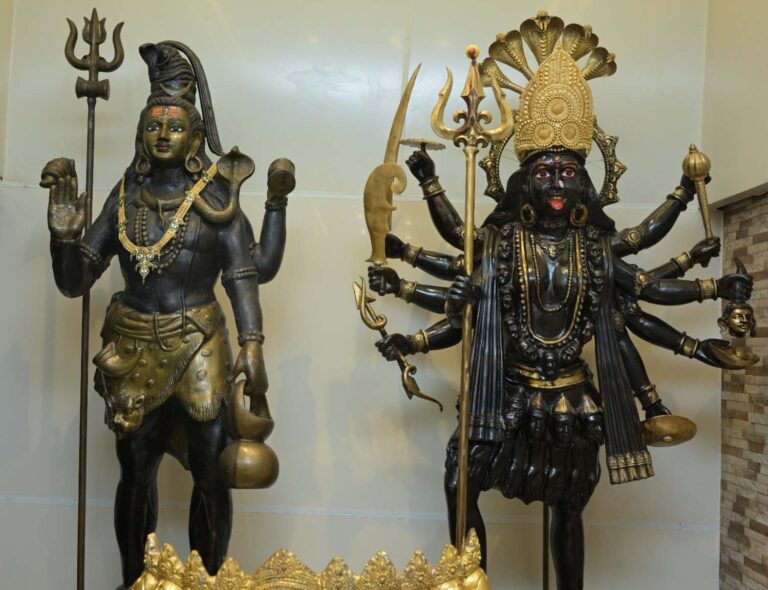
A Temple as a Living Tantric Mandala
From the Tantric perspective, a temple is not simply a structure containing sacred images. Through mantra, nyasa, mudra, invocation, mandala and continuous worship, the entire sacred space is contemplated as a living spiritual field.
The Kularnava Tantra explains mantra as the sacred sound-form of the deity, nyasa as the ritual placement of divine consciousness and the mandala as a sacred field inhabited by the deity and accompanying powers. Thus, the spiritual significance of an image does not arise from its material or appearance alone. Mantra consecration, ritual invocation and uninterrupted worship are equally important. Read the Kularnava Tantra
Accordingly, the deities of Gupt Upasana are worshipped not as an unrelated collection of images, but as interconnected presences within one integrated Shakti Mandala
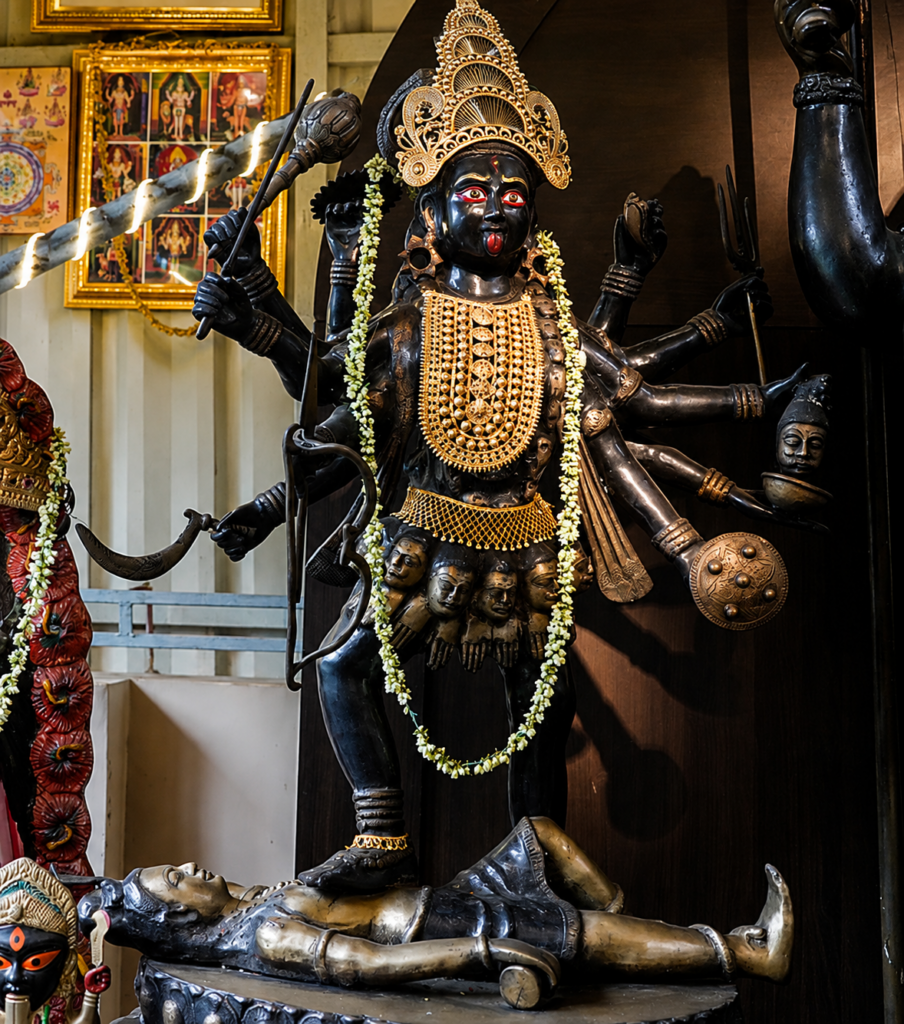
Dashamukhi, Dashabhuja and Dashapada Maa Mahakali
One of the most distinctive sacred images at Gupt Upasana is Maa Mahakali with ten faces, ten arms and ten legs. This form has a clear textual foundation in the
Vaikritika Rahasya associated with the Devi Mahatmyam:
विशालया राजमाना त्रिंशल्लोचनमालया॥
The verse describes the Goddess as possessing ten faces, ten arms, ten feet and thirty expansive eyes. Her radiance resembles dark collyrium. The following verses describe her bearing the sword, arrow, mace, trident, conch, discus, bow and other sacred weapons.
Read Vaikritika Rahasya, Verses 3–5
Her ten faces may be contemplated as awareness extending in every direction, her ten arms as multidimensional divine action and her ten feet as the all-pervading movement of Shakti. Within the temple’s own spiritual tradition, the tenfold form is also understood symbolically as representing the ten directions and the collective power of the Dasha Mahavidyas. The original Vaikritika Rahasya verse, however, specifically establishes the ten-faced, ten-armed and ten-footed iconography; it does not directly identify this form with all ten Mahavidyas. This form of Mahakali represents not merely destruction, but the supreme Adya Shakti who transcends time, fear, ignorance and limitation.Ekadashamukhi Hanuman — The Rare Eleven-Faced Form
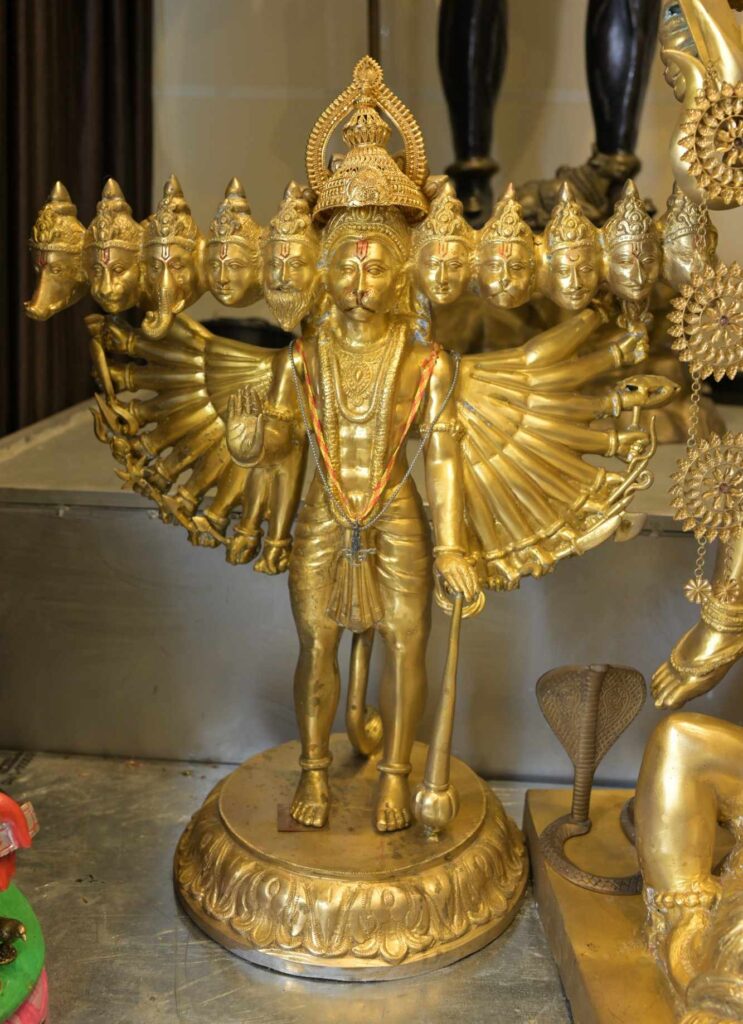
The eleven-faced form of Hanuman is considerably rarer than the familiar single-faced or Panchamukhi forms.
A tradition of worshipping this form appears in the Ekadashamukha Hanumat Kavacham associated with the Agastya Samhita. The text is presented as a sacred dialogue involving Sage Agastya and Lopamudra. Ekadashamukha Hanumat Kavacham
A separate textual tradition of the Ekadashamukhi Hanumat Kavacham is also catalogued as being associated with the Rudrayamala Tantra. Hanuman textual collection
In Shaiva and Tantric interpretation, the number eleven is traditionally associated with the Ekadasha Rudras. Ekadashamukhi Hanuman may therefore be contemplated as a combined expression of devotion, prana-shakti, fearlessness, service and Rudra energy.
Within the sacred mandala of Gupt Upasana, this rare form represents devotion, spiritual discipline, strength and protective awareness
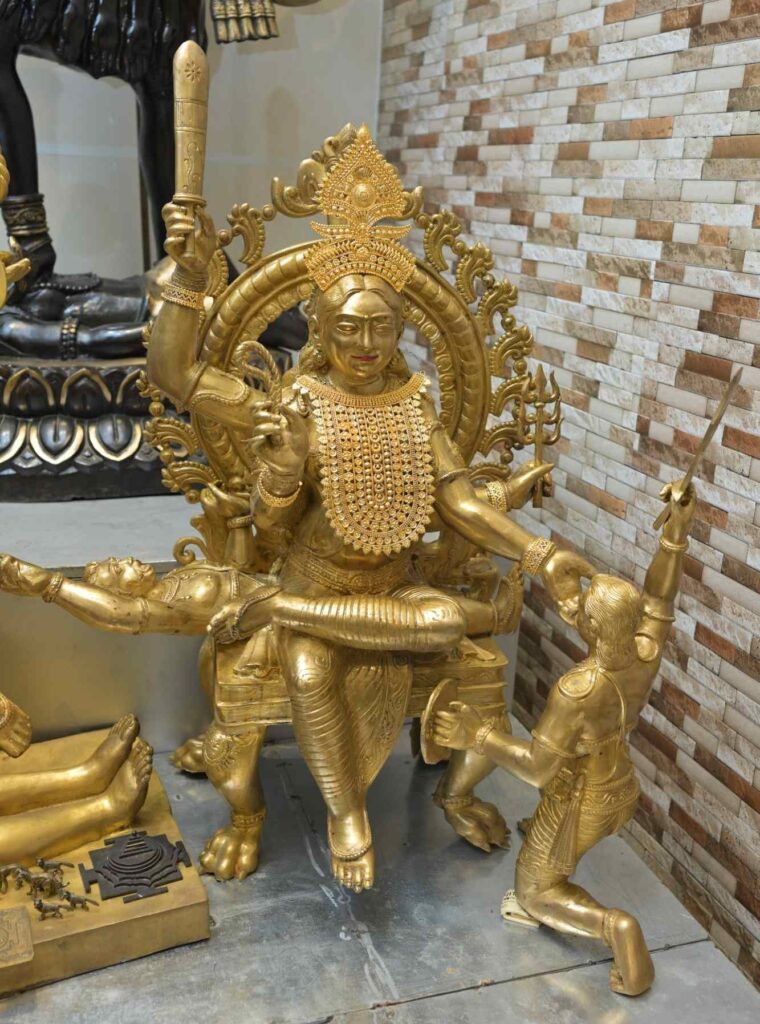
Ashtadhatu Maa Baglamukhi
Maa Baglamukhi is one of the Dasha Mahavidyas. In Tantric traditions, she is known as Pitambara, the power of Stambhana and the Brahmastra Mahavidya.
Her spiritual principle is associated with bringing uncontrolled speech, hostile conflict, mental turbulence and chaotic impulses into stillness. Stambhana should therefore not be understood merely as the external restraint of an opponent; at its higher level, it also represents mastery over destructive speech, uncontrolled thought and inner disorder.
References to Baglamukhi worship, kavacha and mantra traditions are preserved in texts associated with the Rudrayamala Tantra, Vishvasaroddhara Tantra, Kalivilasa Tantra and Dakshinamurti Samhita. Baglamukhi texts and kavachas
Baglamukhi mantra traditions are also included in Mahidhara’s important mantra compendium, the Mantra Mahodadhi. Mantra Mahodadhi edition
The image of Maa Baglamukhi at Gupt Upasana is made of Ashtadhatu and has been specially consecrated according to the temple’s Tantric ritual tradition. In Tantra, the metal of an image forms its physical foundation, while mantra, nyasa, invocation and continuous worship establish it as a centre of sadhana.
Ashta Bhairava — Eight Expressions of Bhairava Consciousness
Another distinguishing feature of Gupt Upasana is the installation of the eight principal forms of Bhairava:
- Asitanga Bhairava
- Ruru Bhairava
- Chanda Bhairava
- Krodha Bhairava
- Unmatta Bhairava
- Kapali Bhairava
- Bhishana Bhairava
- Samhara Bhairava
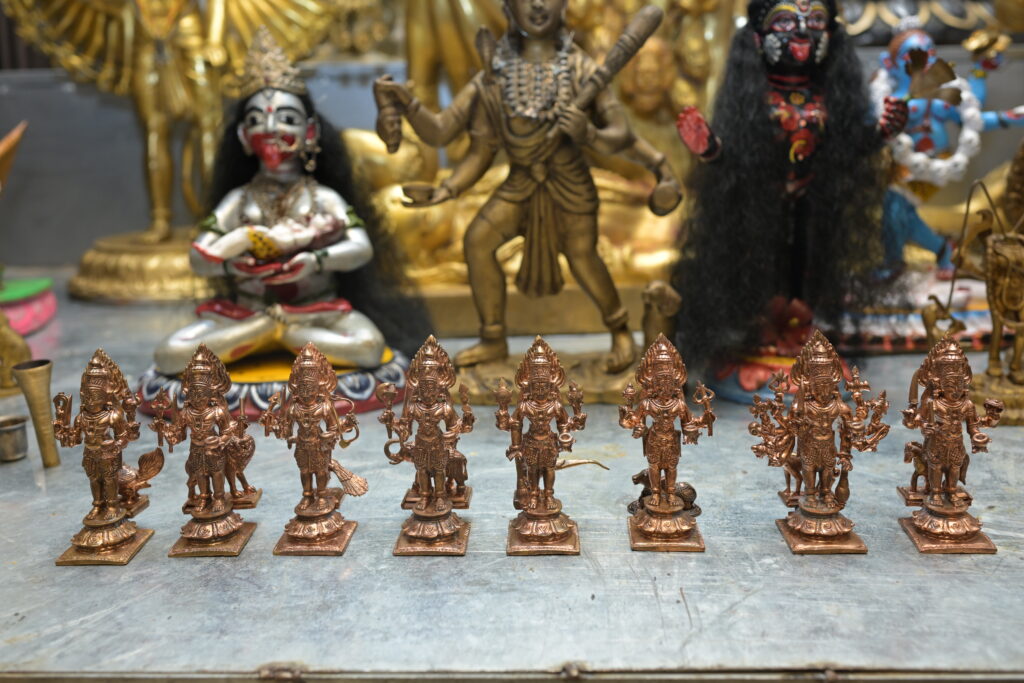
The Dakshina Kali Khadgamala Stotram invokes these eight Bhairavas in the same sequence within its seventh ritual enclosure. Their presence demonstrates the relationship between the Ashta Bhairavas and the protective enclosures of the Shakta mandala. Dakshina Kali Khadgamala Stotram
In traditions associated with the Rudrayamala, each of the eight principal Bhairavas presides over a further group of eight, forming the greater mandala of sixty-four Bhairavas. Ashta and sixty-four Bhairava tradition
The Ashta Bhairavas are traditionally contemplated as guardians of the eight directions and as distinct manifestations of Shiva’s fierce consciousness. Their presence gives the Gupt Mandir the character of a Bhairava-guarded sacred mandala.
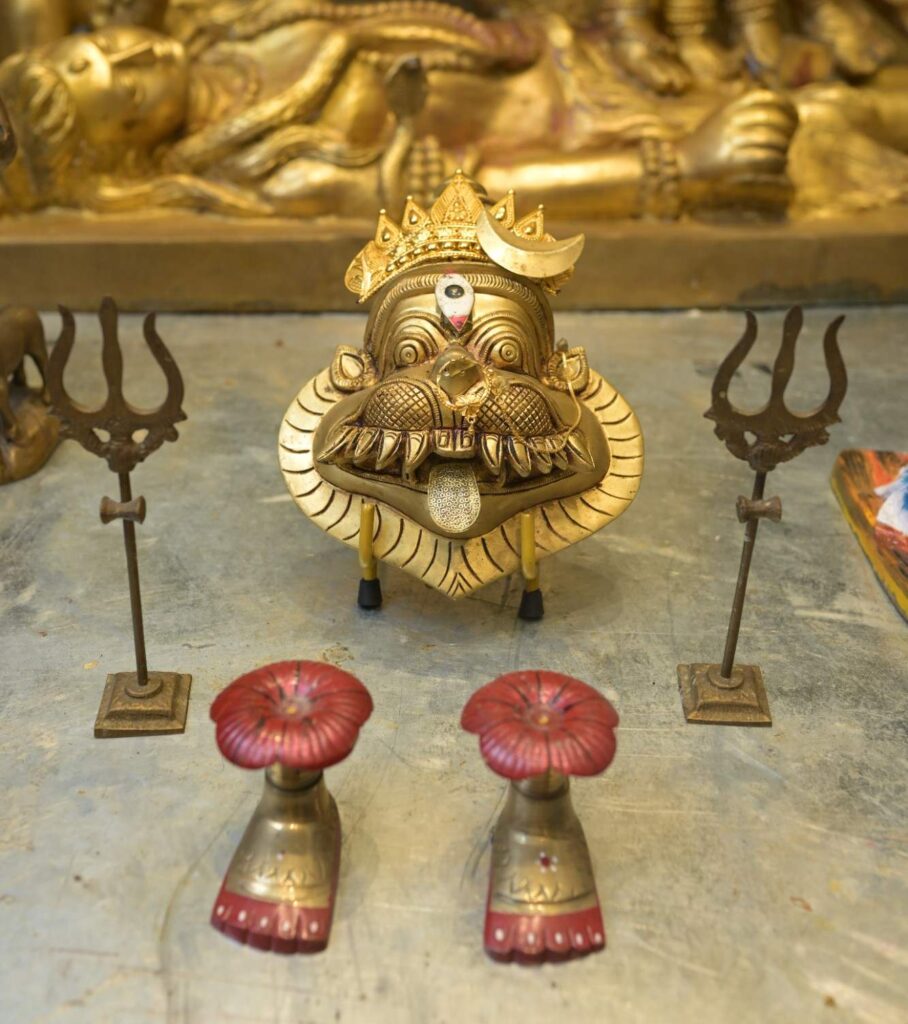
Maa Pratyangira — The Mysterious Fierce Goddess
Maa Pratyangira occupies a highly esoteric position within Tantric traditions. Different lineages identify or associate her with Pratyangira, Narasimhi and Atharvana Bhadrakali.
The dhyana contained in the Pratyangira Stotram describes the Goddess as dark in complexion, vast in form, red-eyed, loose-haired, fanged and intensely fierce. Pratyangira Stotram
Distinct traditions of her worship are also preserved in texts and compilations such as the Pratyangira Kalpam and Akasha Bhairava Kalpam. Pratyangira Kalpam and Akasha Bhairava Kalpam
Her worship is traditionally associated with spiritual protection, fearlessness and the pacification of hostile or adverse influences. However, her esoteric mantras and ritual applications are not intended for casual public experimentation. Such practices traditionally require initiation, discipline and guidance from a qualified Guru.
Why Is the Gupt Mandir Closed to General Visitors?
The word “Gupt” does not merely mean a hidden physical place. It refers to a spiritual discipline protected through Guru–disciple transmission, initiation, eligibility, and strict observance of ritual conduct.
The Kularnava Tantra describes Kaula knowledge as an oral and carefully guarded tradition that should be preserved from the unqualified. It also discusses the secrecy traditionally maintained around the esoteric dimensions of the Shakta and Shaiva Agamas.
Read Kularnava Tantra on secrecy and eligibility
Following this principle, entry into the inner Gupt Mandir is prohibited for general visitors. This restriction is not intended as social discrimination. It exists to preserve ritual sanctity, confidentiality, and the uninterrupted discipline of the worship performed within.
Visitors may receive darshan of Mahakal and Mahakali in the public section of the temple. Approved photographs and videos of the deities within the Gupt Mandir may be viewed through Gupt Upasana’s official social-media platforms.
One Temple — One Complete Shakti Mandala
The rare congregation of deities at Gupt Upasana may be understood as an integrated Tantric mandala:
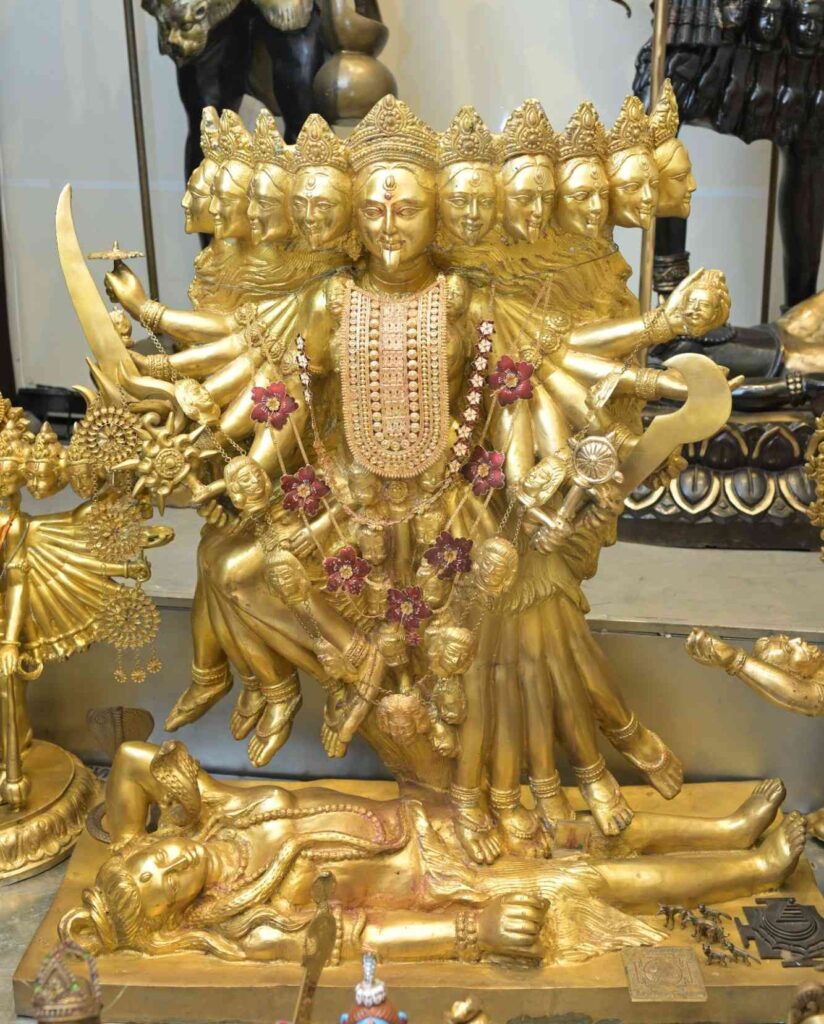
Dashamukhi Mahakali
Adya Shakti and the transcendence of time
Hanuman Ji
Devotion, prana-shakti and Rudra energy
মা বগলামুখী
Stambhana, inner stillness and disciplined speech
Ashta Bhairavas
Eightfold guardianship and Bhairava consciousness
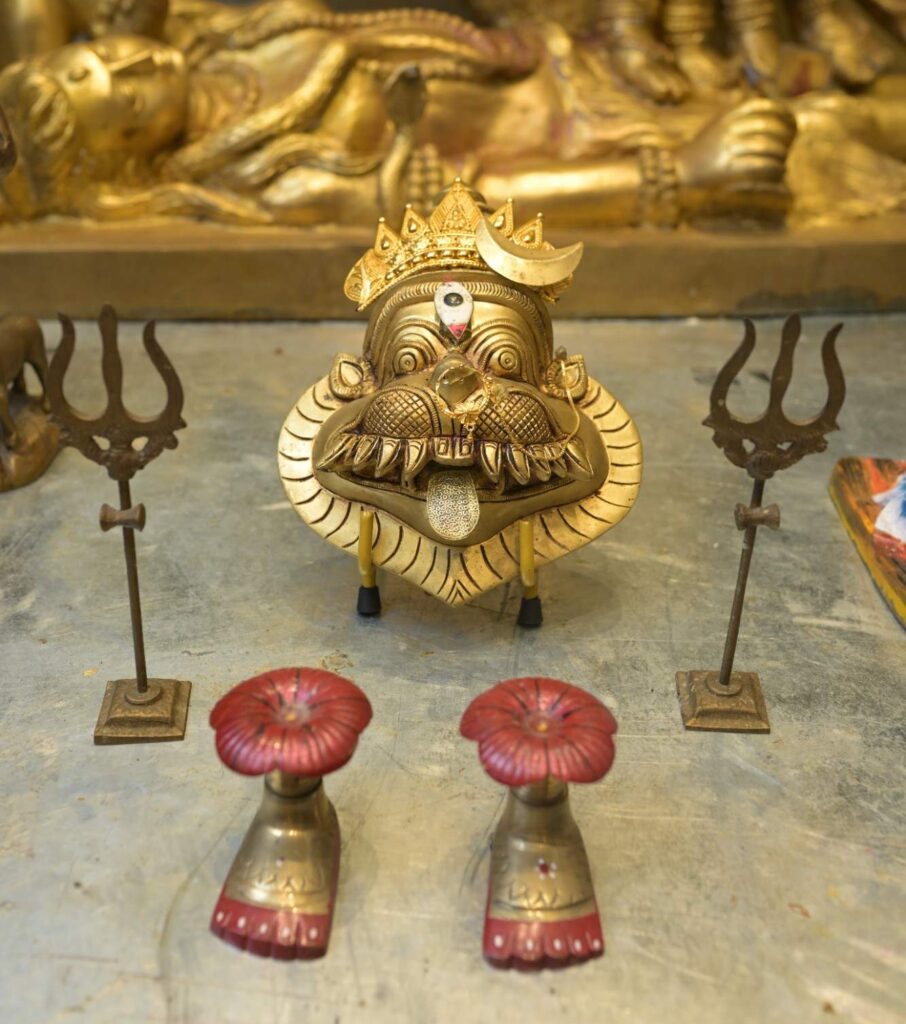
Maa Pratyangira
Fierce protection and the pacification of adverse influences
The presence of these rare forms within one sacred complex gives Gupt Upasana Mahakal–Mahakali Mandir its distinctive identity as one of India’s uncommon centres of integrated Tantric worship.
Darshan and Contact
One temple. Many rare divine forms. One sacred field of Shakti
— Gupt Upasana.
Disclaimer :
The spiritual interpretations presented in this article are based on scriptural references, Tantric traditions and the temple’s own ritual lineage. Puja is a religious and spiritual practice and does not guarantee any particular material result. Esoteric mantras or Tantric practices should not be attempted without proper initiation and guidance from a qualified Guru.
Visitors Guideline
- Entry into the inner Gupt Mandir is strictly prohibited for general visitors.
- Public darshan of Mahakal and Mahakali is available in the open section of the temple.
- Contact Gupt Upasana through mail for information concerning puja, sankalpa and devotional offerings.
Connect With Us
Offer Your Seva
Your support helps sustain the sacred space, daily worship and spiritual activities of Gupt Upasana